


https://www.youtube.com/watch?v=4pWFTrPwXOI Summary: The Fastest Boats Ever Made Key Takeaways
If you’re curious about the fastest boats ever made, this breakdown gives you the big picture fast. Based on Top Fives’ original video, the speed leaders range from drag hydroplanes and offshore catamarans to hydrofoils, ferries, and even electric production boats. They don’t all chase speed the same way, and that’s what makes this list useful.
According to Top Fives, the boats on this list often sacrifice cabin space, convenience, and ease of ownership to gain raw pace. You’ll see outputs of 8,000 horsepower, top speeds beyond 260 mph, and hull materials such as carbon fiber, Kevlar, fiberglass, and aluminum. As demonstrated in the video, some are race-only machines, while others are available through boat sales networks or specialty builders.
- Speed usually beats comfort in the fastest designs.
- Hydroplanes, catamarans, hydrofoils, and deep-V hulls all appear for different reasons.
- New technology matters as much as horsepower, especially in hull shape, weight reduction, and propulsion.
- Luxury and speed can coexist, but only with expensive engineering.
- Electric boating is now part of the story, especially in as battery performance keeps improving.
If you’re shopping, dreaming, or comparing designs for boating vacations, water sports, or yachting, this article turns the video into a practical guide you can scan in minutes.
TL;DR / Key Takeaways
The quickest lesson from the video is simple: the world’s fastest boats are built around drag reduction, power delivery, and stability, not plush cabins. The creator explains that some of these vessels are essentially floating race cars. That’s most obvious with Problem Child, a top fuel hydroplane with a 500-cubic-inch supercharged nitro-burning Hemi making about 8,000 horsepower.
The list also shows there’s no single formula for speed. You get hydroplanes running 1,000-foot passes in 3.3 seconds, offshore production boats like the Cigarette Marauder hitting 140 mph, and a luxury yacht like The World is Not Enough reaching 70 knots. Those numbers matter because they show how boating performance changes depending on whether you care most about acceleration, top speed, range, payload, or comfort.
- Fastest race boat in this segment: Problem Child at over mph.
- Fastest public production option shown: Cigarette Marauder at about mph.
- Notable electric entry: Say 29E at knots.
- Fast military concept shown: HMCS Bras d’Or at knots.
For practical boating, these machines also teach useful lessons. Hull shape, trim, marine safety gear, navigational tools, and regular boat maintenance all matter. If you follow boating news, browse Boat Trader, read boating magazines, or spend time in boating community forums, you’ll notice the same themes coming up again and again: lighter materials, better propulsion, safer high-speed handling, and growing interest in sustainable boating practices.
Introduction to Fast Boats
Boats weren’t originally designed to be missiles on water. Most older recreational and working vessels prioritized cargo, fishing, ferry duty, or sailing efficiency. High-speed boating became a serious engineering target once more powerful engines, better hull testing, and lighter composites entered the scene. That evolution is the real story behind the fastest boats ever made.
As demonstrated in the video, speed on water is harder than speed on land. Water is dense, unstable, and constantly changing. A vehicle can’t rely on steady tire contact the way a race car can, so designers chase every edge they can find: stepped hulls, hydrofoils, catamaran tunnels, carbon fiber layups, and careful weight distribution. At 100+ mph, tiny setup errors become major risks.
The appeal is easy to understand. Fast boats combine boating, yachting, racing, and pure spectacle. They’re popular at boat shows, in GoPro videos, and across YouTube boating videos because they look almost unreal. You watch a boat skim the surface and wonder how it stays planted at all.
If you want to connect the excitement to real ownership, here’s what matters most:
- Purpose: racing, offshore runs, luxury cruising, passenger transport, or military use.
- Hull type: deep-V, catamaran, hydrofoil, or hydroplane.
- Propulsion: outboard motors, inboards, turbines, water jets, or electric drives.
- Operating costs: fuel, dock accessories, marine insurance, and boat insurance.
- Skill: high-speed handling requires boating skills training and respect for local boating regulations.
That last point often gets ignored. You can admire these machines and still recognize that boating etiquette, marine safety, and maintenance discipline are what keep fast fun from turning into expensive trouble.
Top Speed Records in Boating History
Speed records on water carry a special weight because they’re far less forgiving than land records. The video shows this clearly with Problem Child’s acceleration figures: 260+ mph over water and a 1,000-foot run in 3.3 seconds. That’s the kind of number that would grab attention even in drag racing. On water, it’s staggering.
The creator explains that record attempts depend on more than engine output. Designers must balance thrust, lift, drag, and control. A boat that makes too much lift may become unstable. A hull with too much wetted surface loses speed. A setup that works in calm conditions may be dangerous in crosswinds or chop. That’s why speed records in boating history often stand for years.
Compared with land vehicles, boats face three major disadvantages:
- Variable surface conditions: every run depends on water state and wind.
- Limited traction model: the hull interacts with water, not a fixed road.
- Higher instability risk: porpoising, chine walk, stuffing, and blowover are real threats.
Technology has closed some of that gap. Modern builders use computational design, carbon structures, telemetry, GPS speed verification, and advanced engine mapping. You’ll see those trends discussed in boating magazines, boating news sites, and boat trading communities. In our experience reading owner reports and race coverage, the biggest leap hasn’t been one magic engine. It’s the combination of lighter materials, better hydrodynamics, and more precise setup.
That matters to ordinary owners too. Even if you’ll never chase a record, the same lessons shape faster center consoles, offshore fishing boats, and performance cruisers sold in today’s boat sales market.
Hydroplane Technology: Problem Child
At 1:08, the video introduces Problem Child, and it earns its place immediately. This top fuel hydroplane is built for straight-line drag racing, not casual boating vacations. According to Top Fives, it uses a 500-cubic-inch supercharged nitro-burning Hemi and produces roughly 8,000 horsepower. It has also set the 15 quickest 1,000-foot times ever, with speeds above 260 mph.
That power figure alone doesn’t explain the result. Hydroplanes are designed so that only a tiny portion of the craft stays in contact with the water at speed. Less contact means less drag. The boat effectively rides on a thin cushion of controlled lift, which is why hydroplane technology remains one of the most dramatic ways to build the fastest boats ever made.
The video draws a smart comparison to drag racing. The engine architecture is similar to what you’d see in top-level drag cars, and the tuning demands are just as extreme. But on water, there’s an extra layer of complexity. You need thrust without upsetting the hull, and you need stability without adding drag.
What can you learn from that if you’re not a racer?
- Weight placement matters more than many new owners expect.
- Hull setup is performance, not just comfort.
- Testing beats guesswork every time, especially after prop, trim, or engine changes.
If you’re watching GoPro videos of performance boating and wondering why pro teams obsess over setup, this is the answer. Speed on water is won in tiny details, and Problem Child is the clearest example in the video.
Luxury Meets Speed: The World is Not Enough
At 5:45, Top Fives shifts from race-focused machines to one of the most unusual entries: The World is Not Enough. This 140-foot (43-meter) yacht proves that luxury doesn’t always have to crawl. The video says it uses two Paxman 18-cylinder diesel engines producing a combined 10,870 horsepower, with twin turbines pushing output far higher. The result is a top speed of 70 knots, or just over 80 mph.
For a luxury yacht, that’s extraordinary. Many large yachts cruise at roughly a third of that pace. As the creator explains, the boat relies on a lightweight aluminum superstructure and a dead-rise V hull that helps it cut through changing sea conditions. The claimed 3,800-mile range also sets it apart from many pure speed machines, which often trade endurance for headline numbers.
This boat highlights the trade-offs between speed and luxury:
- More power means higher complexity and operating cost.
- Noise and vibration control become harder at high speeds.
- Structural engineering must support comfort without adding too much weight.
If you follow yachting, marine insurance, or premium boat trading, this is where the conversation gets interesting. A high-speed yacht isn’t just a toy. It affects maintenance schedules, crew needs, dock planning, and insurance terms. It also raises practical questions about boating etiquette in busy harbors and local speed regulations near marinas or protected coastlines.
That’s why this yacht stands out. It isn’t simply fast. It shows how expensive and deliberate the engineering becomes when you want both luxury and serious pace.
The Fastest Production Boats
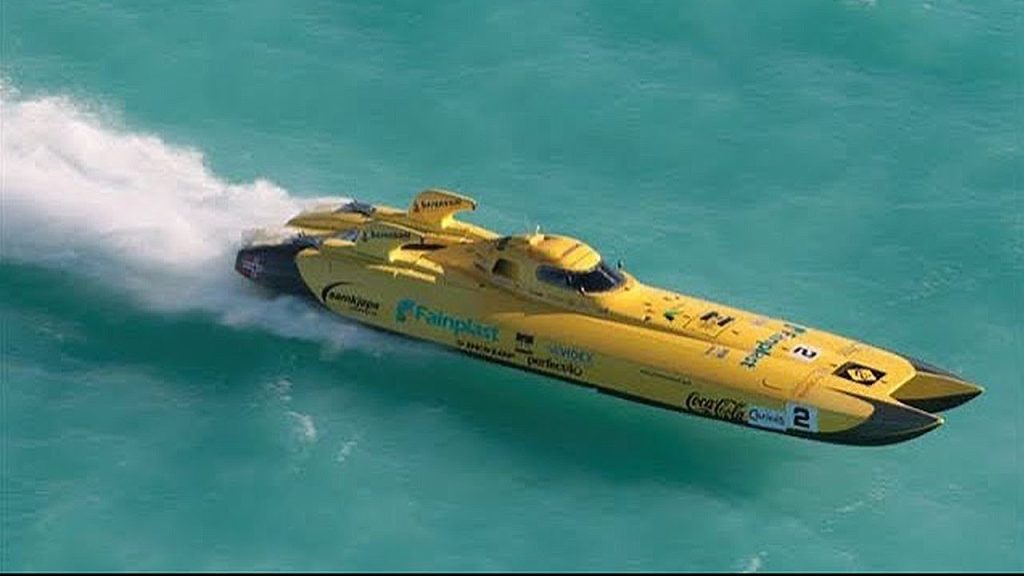
At 2:15, the video spotlights one of the most attainable stars on the list: the Cigarette Marauder AMG Monaco. “Attainable” is relative, of course. This 50-foot performance boat uses twin Mercury Racing V8 engines for more than 3,000 horsepower, and Top Fives reports a top speed of about 140 mph (225 km/h) on racing fuel.
That makes it one of the most impressive production-ready entries among the fastest boats ever made. It also shows how the consumer market has changed. Buyers now expect race-derived materials, cleaner digital helm layouts, and stronger resale visibility through online boat sales platforms such as Boat Trader and specialist brokers. Many production speed boats also feature better onboard electronics than older race-inspired models, including modern navigational tools, engine monitors, and camera integration for YouTube boating videos.
The Marauder’s construction matters just as much as its engines. The video notes a specialized layup process and a carbon-fiber hull to reduce weight and improve handling under heavy loads. That’s the sort of manufacturing detail you’ll also see highlighted at major boat shows and in boating magazines.
If you’re comparing fast production boats, focus on these points:
- Hull material: carbon fiber costs more but saves weight.
- Engine support: Mercury Racing parts and service access matter.
- Use case: poker runs, day boating, or offshore runs all demand different setups.
- Ownership costs: fuel burn, boat maintenance, storage, and boat insurance add up quickly.
Production speed boats sit at the point where fantasy meets real ownership. They may not beat purpose-built drag boats, but they’re the models that influence broader boating culture the most.
Electric Revolution: Say 29E
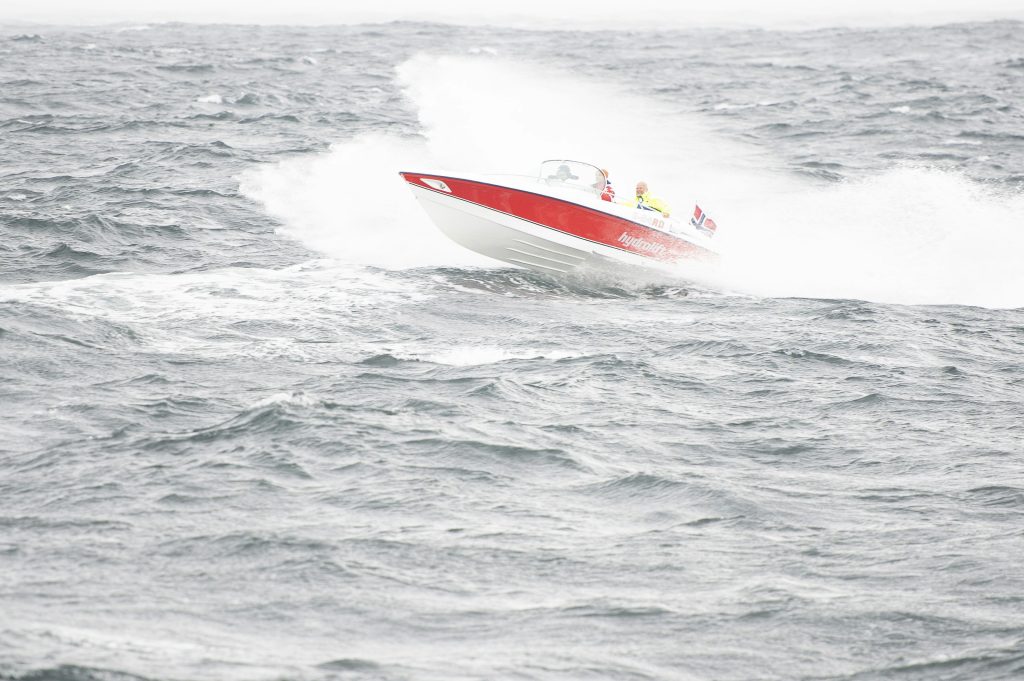
At 7:20, the video introduces a very different kind of performance craft: the Say 29E. Built by Say Yachts, this fully electric speed boat uses low weight as its secret weapon. The video states that its carbon-fiber hull weighs under pounds (400 kg), and during testing it reached 50 knots, or about 58 mph (93 km/h). For an electric production boat, that’s a serious number.
According to Top Fives, the design goal was twofold: increase battery and motor output while reducing overall mass. That’s the electric boating equation in one sentence. You can’t just add bigger batteries forever because weight hurts efficiency and performance. So designers chase lighter hulls, smarter packaging, and cleaner propulsion control.
The Say 29E matters beyond raw speed. It points to the future of sustainable boating practices, especially in areas where emissions rules, marina policies, and noise limits are getting stricter. In 2026, that’s no longer a niche concern. Electric propulsion now intersects with boating news, emerging technology, and environmental impact in ways mainstream buyers can’t ignore.
Here’s where electric boats are already changing the conversation:
- Lower local emissions in harbors and inland waterways.
- Less noise, which improves comfort and can help around sensitive shorelines.
- Simpler routine maintenance compared with high-output combustion setups.
There are still limits. Range, charging time, and charging infrastructure remain important. If you’re planning boating vacations or considering charter options through operators like Moorings, electric choices still vary by region. Even so, the Say 29E proves that sustainable boating doesn’t have to be slow or dull.
Military Speed: HMCS Bradior 400
At 6:30, the video turns to military speed with the HMCS Bras d’Or 400, referred to in the transcript as Bradior 400. This Canadian hydrofoil was built for the Cold War and reportedly reached 63 knots, or just over 72 mph (116 km/h), during testing in the 1970s. Its development costs exceeded $300 million, a huge sum for a prototype that never entered full service.
The design used hydrofoils to lift most of the hull above the water, leaving only limited contact points. That sharply reduces drag and allows smoother high-speed travel in conditions that would slow conventional boats. As demonstrated in the video, the idea was to create a fast submarine hunter that could respond quickly in rough weather.
Military and civilian fast boats solve different problems:
- Military craft prioritize mission speed, tracking, and survivability.
- Civilian craft often balance speed with comfort, range, and cost.
- Luxury and consumer models also face stricter market pressure around resale and usability.
This section also reminds you that not every breakthrough becomes a commercial success. Some technologies shape the future indirectly. Hydrofoil thinking now appears in ferries, racers, and even electric boats. It also influences marine safety planning, because lifting the hull changes handling, stopping distance, and emergency response needs.
If you enjoy boating skills training, this is a good case study. High speed means nothing if crews can’t manage systems, read conditions, and work within local boating regulations. The fastest boats ever made are impressive, but disciplined operation is what makes them useful.
The Role of Design in Boating Speed
Around 4:00, the video emphasizes something every performance builder knows: hull design is speed. Horsepower gets attention, but shape determines how efficiently that power turns into motion. A poor hull wastes energy through drag, instability, and bad water flow. A great one planes quickly, stays predictable, and keeps just enough contact with the surface.
The main high-speed design approaches shown or implied in the video include hydroplanes, catamarans, hydrofoils, and deep-V hulls. Each solves a different problem. Catamarans improve stability and reduce drag with twin sponsons. Deep-V hulls handle rougher offshore water better. Hydrofoils lift the hull to reduce wetted area. Hydroplanes skim at extreme speed.
Materials matter too. The video references carbon fiber, fiberglass, Kevlar, foam-core construction, and aluminum. Those aren’t just marketing terms. They affect rigidity, weight, fuel use, and long-term maintenance. In our experience reviewing owner discussions and builder specs, lightweight construction pays off only when the structure remains stiff enough to handle repeated impact loads.
To improve speed and efficiency, builders focus on:
- Hydrodynamics: reducing drag below the waterline.
- Aerodynamics: controlling lift and wind resistance above the deck.
- Balance: proper engine, fuel, and passenger placement.
- Propulsion matching: choosing the right drives, props, jets, or outboard motors.
Design choices also affect practical use. A hull that’s perfect for flat-water speed may be miserable for rough-water fishing, dock maneuvering, or family boating. That’s why smart buyers don’t look at speed alone. They look at the whole boating job the boat needs to do.
Emerging Technologies in the Fastest Boats Ever Made
The biggest lesson from the video isn’t that boats keep getting faster. It’s how they’re getting faster. Emerging technology now touches almost every part of performance boating: materials, propulsion, steering, safety systems, digital controls, and predictive maintenance. The creator explains this through examples rather than theory, but the trend is clear across the whole list.
Three areas stand out most in 2026:
- Lightweight composite construction using carbon fiber and advanced layup techniques.
- Hybrid and electric propulsion for quieter, cleaner performance.
- Smarter onboard systems for diagnostics, trim data, GPS logging, and route planning.
Those developments matter to owners, not just race teams. Better sensors make boat maintenance more predictable. Improved digital throttles and helm displays make high-performance boats easier to manage. New marine safety features, including improved kill-switch systems and integrated alerts, reduce human error. Even dock accessories are improving, with better fender systems and mooring tools for handling powerful boats safely around slips.
This also ties into the wider boating world. Boat trading platforms, boating magazines, and community forums are full of discussions about range anxiety, maintenance intervals, resale values, and environmental impact. Sustainable boating practices now include cleaner propulsion, careful wake management, proper waste handling, and smarter route planning to reduce fuel burn.
If you’re buying or operating a fast boat, your next steps should be practical:
- Check local boating regulations before chasing speed.
- Take boating skills training if you’re moving into a faster class of boat.
- Review marine insurance requirements for high-performance craft.
- Build a maintenance plan before your first full season.
- Use quality navigational tools and weather data every trip.
That’s where the future is headed: not just faster boats, but smarter and more responsible ones.
Frequently Asked Questions
Reduce speed before you meet the swell line and approach at a slight angle when conditions allow. Keep the boat trimmed so the bow doesn’t pound, avoid sudden steering inputs, and watch the next wave set before adding throttle.
What is the best hull design for rough water?
A deep-V hull is the usual answer for rough water because it slices through chop better than flatter hulls. The trade-off is lower efficiency and often higher fuel use than a flatter or catamaran-style design in calm conditions.
What is the most popular sailing YouTube channel?
Popularity changes often, but Sailing La Vagabonde is widely regarded as one of the biggest sailing channels on YouTube. For list-style boating content rather than pure sailing, Top Fives has strong reach in the broader YouTube boating videos space.
How to trim a boat for rough water?
Trim the bow slightly down to help the hull cut waves and maintain control, then make small adjustments as conditions change. Too much positive trim can cause pounding, porpoising, or loss of bite in turns, especially at speed.
Do fast boats cost more to insure?
Usually, yes. High-performance boats often bring higher boat insurance or marine insurance premiums because of speed, repair costs, storage needs, and operator risk. Insurers may also ask about training, navigation limits, and your prior boating experience.
Conclusion: What These Speed Machines Mean for Real Boating
The fastest boats ever made are exciting because they show what happens when engineers chase pure performance without compromise. But they’re also useful because they reveal the basics of good boating design: low drag, smart weight control, stable hull geometry, reliable propulsion, and disciplined operation. As demonstrated in the video, those principles scale from race hydroplanes all the way to ferries, military prototypes, and luxury yachts.
If you’re deciding what to do next, keep it simple. Watch the original Top Fives video for the visuals, then use this article to compare types, speeds, and trade-offs. After that, narrow your interest:
- Want ownership? Compare listings on Boat Trader and track real maintenance costs.
- Want safer skills? Take a high-performance boating course and practice trim, wave handling, and docking.
- Want future-proof tech? Follow electric and hybrid boat launches, especially in premium day boats.
- Want smarter boating? Learn local rules, respect boating etiquette, and invest in safety gear before horsepower.
The creator explains the spectacle well, but the real takeaway is practical. Fast boats are never just about going faster. They’re about what careful design, testing, and purpose-built engineering can do on the hardest surface to master: open water.
Frequently Asked Questions
How to drive a boat in swells?
Drive diagonally to large swells when you can instead of hitting them head-on at speed. Reduce throttle, keep a firm but relaxed grip, and use trim sparingly so the bow doesn’t pound or launch. Watch wave intervals, secure loose gear, and always wear proper marine safety equipment.
What is the best hull design for rough water?
For rough water, a deep-V hull is usually the best all-around choice because it cuts through chop better than flatter designs. That’s one reason the video highlights fast offshore boats and yachts with pronounced V-shaped hulls. The trade-off is that deep-V boats often need more power and fuel than flatter hulls.
What is the most popular sailing YouTube channel?
There isn’t one official answer because popularity changes by year, platform, and niche. In sailing, channels like Sailing La Vagabonde are widely seen as among the biggest, while Top Fives is popular for broader YouTube boating videos and list-style content. If you want pure sailing, check subscriber counts, watch time, and community activity before deciding.
How to trim a boat for rough water?
Trim for rough water by bringing the bow slightly down so the hull can bite and track cleanly, but don’t over-trim or you’ll stuff the nose into waves. Make small adjustments, then reassess how the boat lands and turns. On outboard motors and sterndrives, a few taps of trim can make a major difference in comfort and control.
Are electric boats fast enough to compete with gas-powered speed boats?
Not always. Electric performance boats are improving fast, and the Say 29E proves that lightweight carbon construction and strong battery systems can deliver serious speed. But for outright top-end records, combustion engines and turbine setups still dominate most of the fastest boats ever made.
Key Takeaways
- The fastest boats ever made rely on specialized hulls, lightweight materials, and extreme power, not everyday comfort.
- Problem Child, the Cigarette Marauder, The World is Not Enough, Say 29E, and HMCS Bras d’Or show how different design goals produce different kinds of speed.
- Hydroplanes, hydrofoils, catamarans, and deep-V hulls each solve different performance problems on water.
- Electric performance boating is now a real part of the conversation, especially as sustainable boating practices gain momentum in 2026.
- If you want a fast boat, focus on skill, maintenance, insurance, local regulations, and marine safety before top-speed claims.