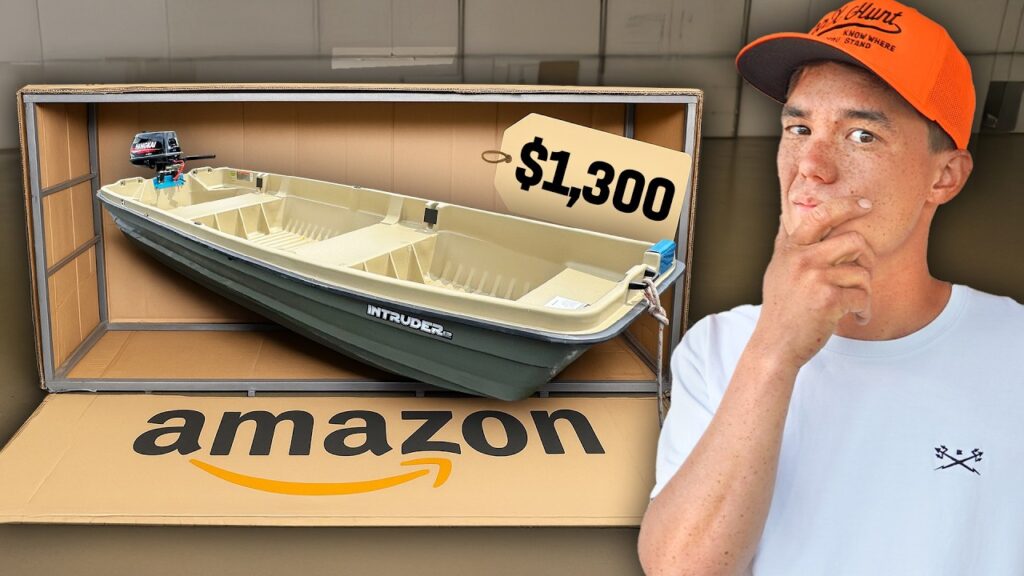



https://www.youtube.com/watch?v=p8gDPMK6Qr4 Summary: Exploring the Cheapest Powered Boat on Amazon
If you’ve searched for the cheapest powered boat on Amazon, Luke McFadden’s video is one of the clearest real-world tests you’ll find. In I bought the CHEAPEST powered boat on Amazon, the creator explains what happens when you order a Pelican Intruder 12 and a Hangkai outboard online and try to make a workable budget boating setup out of it.
This article turns that video into a practical written review you can scan quickly. You’ll get the real specs, pricing, safety concerns, setup limits, and what this kind of bargain boat means for beginners in 2026. You’ll also get context the video only touches on, including boating regulations, marine insurance questions, dock etiquette, fuel efficiency, weather conditions, sustainability, and how modern boat design is changing entry-level boating.
Original video: Watch on YouTube
Channel: Luke McFadden
Related boating gear marketplace: Amazon
Key Takeaways
The fast answer is simple: yes, you can buy an extremely cheap boat-and-motor package online. But price alone doesn’t tell you whether it’s a smart buy. As demonstrated in the video, this setup works best when you treat it like a light-duty, sheltered-water fishing boat, not a do-everything vessel.
According to Luke McFadden, the package came in at roughly $950 for the boat and $359 for the engine. That total of around $1,309 is far below what you’d usually pay for a new outboard setup, especially when he notes that a modern name-brand 6-horsepower outboard can approach $2,000 by itself. That price gap is the whole point of the video.
- Affordable boating exists: Amazon can now deliver a new hull and motor in as little as 2 to 6 days, which would have sounded odd to many buyers just a decade ago.
- The boat is usable, but basic: The Intruder has rod holders, oar locks, and a flat bottom, but very limited storage and low freeboard.
- The motor is where the gamble starts: The Hangkai looks like a conventional outboard, but the creator points out quality-control issues during unboxing.
- Safety matters more than savings: You still need life jackets, signaling devices, registration paperwork, and a legal safety kit.
- Best use case: Calm water, short trips, beginner-level boating, and simple fishing—not open water, rough weather, yachts, water sports towing, or heavy loads.
In our experience evaluating budget marine equipment, the low sticker price is only the first number you should look at. Add fuel, two-stroke oil, paddles, lines, registration, marine insurance if required, and basic navigation tools, and the real ownership cost rises fast.
Introduction to Budget Boating
Budget boating has changed a lot by 2026. Years ago, entry-level buyers often found their first skiff in local classifieds, marina bulletin boards, or what Luke McFadden jokingly recalls as the old Penny Saver style of shopping. Now, the creator explains, you can order a boat online almost as casually as you order household gear. That shift says a lot about modern manufacturing, logistics, and buyer expectations.
The video’s opening frames the purchase as a mix of curiosity and disbelief. Luke McFadden found the Pelican Intruder during an Amazon Prime-style sale and followed it with a $359 Hangkai engine. His reaction is the same one many viewers have: how can something that looks like a regular outboard cost so little and arrive at your house in a few days?
That convenience is real, but it changes how you need to shop. If you’re a beginner, you can’t judge a boat only by product photos and price. You need to consider:
- Boat type: Is it built for ponds, creeks, marinas, or open bays?
- Capacity: Will it safely hold two adults plus fuel and gear?
- Regulations: Do you need registration, a title, boating licenses, or local safety inspections?
- Support: If the engine fails, who services it?
This matters across the wider boating world too. Whether you’re comparing fishing boats, kayaks, paddleboarding gear, sailing dinghies, yachts, or charter services, convenience has made entry easier. It has not made the water safer. Weather conditions still matter. Dock etiquette still matters. Boat maintenance still matters. The cheapest powered boat on Amazon may get you afloat, but your decisions after purchase determine whether it stays a bargain.
Unboxing the Cheapest Powered Boat on Amazon: Intruder Boat and Hangkai Engine
At 01:10, the video moves into the unboxing, and this is where the review becomes useful. The creator shows that the boat and motor arrived in very different ways. The Intruder came wrapped in a large plastic bag with protective material, while the engine arrived boxed more like conventional equipment. That detail matters because packaging often tells you how a product is expected to survive shipping.
As demonstrated in the video, the first surprise wasn’t that the boat looked fancy. It was that it looked functional. For a hull priced under $1,000, the basic shape, molded seating, and utility-focused layout seemed acceptable. At 02:30, Luke McFadden points out several economy-grade touches, including simple molded features and a very minimal finish. He also notices rod holders made in a stripped-down, cost-saving way.
There are a few practical lessons here if you buy marine equipment online:
- Inspect the hull immediately for cracks, warping, missing hardware, and paperwork.
- Photograph the packaging before opening in case you need to file a damage claim.
- Check serial numbers and declaration of origin documents before trying to register the boat.
- Open the engine cowling early and look for paint flaws, cracked plastic, corrosion, or loose hardware.
According to Luke McFadden, one concern was whether the boat came with proper title documentation. That’s not a minor issue. In many states, small powered boats still fall under boating regulations that require registration, and some buyers don’t discover a paperwork problem until they reach the DMV or launch ramp. If you’re shopping for the cheapest powered boat on Amazon, the smartest move is to think like a surveyor during the first 20 minutes after delivery.
Specifications of the Intruder Boat
At 03:45, the creator reads through the posted capacity and power details, and these numbers define the whole setup. The Pelican Intruder 12 is 12 feet long or 144 inches, rated for 6 horsepower, and listed around 395 pounds for two persons on the capacity plate, though another figure shown during the video references 420 pounds. When you see conflicting numbers like that, always defer to the official capacity plate on the boat itself.
At 04:30, the strengths and limitations become clearer. The flat-bottom design should make the boat stable at rest, which is useful if you’re casting, bait fishing, or moving around slowly. That makes it closer in spirit to a tiny pond boat than to a V-hull runabout. It also has molded rod holders and oar locks, both of which support backup propulsion and simple fishing use.
The biggest compromises are just as obvious:
- Very little storage for safety gear or tackle
- No obvious drain plug, which changes how you manage water in the hull
- Low freeboard, meaning less margin in chop or boat wakes
- Sealed bulkheads, which limit water flow through the hull
What does that mean in practice? This is likely best for calm inland water, tiny ramps, private property ponds, and short-distance fishing trips. It is not built for rough channels, heavy water sports, or cruising destinations where conditions change quickly. You wouldn’t compare this to larger fishing boats, sailing boats, cruise lines, or charter services, but the basic lesson carries across all boat types: hull shape controls where you can go safely.
If you buy a boat this small, use a simple checklist before every launch:
- Check weight on board, including fuel and cooler.
- Review weather conditions and wind speed.
- Load safety bag where it won’t shift.
- Carry a paddle even with a motor installed.
- Stay close to shore on your first trips.

Examining the Hangkai Engine
At 05:15, Luke McFadden turns to the most surprising part of the package: the Hangkai outboard. The headline number is the price. At $359 brand new, it sits far below normal retail expectations for an outboard that visually resembles a mainstream small motor. The creator explains that a modern brand-name 6-horsepower engine might cost close to $2,000, which makes this listing feel almost implausible.
At 06:00, the comparison with traditional outboards becomes more concrete. The Hangkai is a two-stroke, which usually means lighter weight, simpler mechanical design, and lower manufacturing cost than a four-stroke. It has a top-mounted fuel tank, and the video shows forward, neutral, and reverse. That’s notable because very cheap small outboards sometimes omit true reverse and require you to rotate the motor instead.
Then comes the catch. At 07:00, the creator points out quality issues that buyers should take seriously:
- Crooked cowling alignment near the fuel cap
- Paint runs and orange peel
- A crack in the cowling that appeared painted over
- Signs of corrosion around the head gasket area
- Sharp cut zip ties and rough finishing
As Luke McFadden explains, none of this automatically means the engine won’t run. But it does mean you’re outside the normal standards of fit and finish you’d expect from Mercury, Yamaha, Suzuki, Tohatsu, or Honda. If you buy one, plan to do a full pre-launch inspection. Check spark plug condition, gear oil, prop hardware, throttle movement, cooling-water flow, fuel mix ratio, and idle quality.
For buyers focused on fuel efficiency and maintenance, this is also where brand support matters. A cheap two-stroke may save money upfront, but parts access, service knowledge, and long-term reliability can erase that savings fast. A low entry price isn’t the same as low cost of ownership.
Safety Considerations for the Cheapest Powered Boat on Amazon
At 08:00, the conversation shifts toward the issue that matters most: safety. The video makes an important point many new buyers miss. Even if the boat itself is inexpensive, the legal and practical safety requirements don’t get cheaper. A powered vessel still needs to meet local boating regulations, and in some states that means registration, numbering, and proof of ownership before launch.
At 09:00, Luke McFadden mentions carrying a go bag with the equipment needed to stay legal. That’s smart because the Intruder has limited storage. If you’re using a tiny boat with no built-in compartments, you need a waterproof, easy-to-grab kit that stays organized every trip.
Your minimum safety list should include:
- U.S. Coast Guard-approved life jackets for every person
- Sound signaling device, such as a whistle or horn
- Throwable or paddle backup where required or practical
- Fire extinguisher if your setup and local rules require one
- Navigation lights for low-light operation
- Basic first-aid kit
- Phone in a waterproof case plus portable charger
There’s a bigger beginner lesson here too. Safe boating techniques are not just for offshore captains, sailing crews, or yacht owners. They matter even more in small craft because your margin for error is smaller. Low freeboard means waves come aboard faster. A light hull is more affected by wind. A budget engine may not tolerate abuse. And if you’re boating near marinas, remember dock etiquette: approach slowly, use lines early, and never assume reverse will respond like a premium outboard.
Also think beyond the launch. Ask yourself whether you need a boating license or safety certificate in your state. Check local marine insurance options. Review weather conditions twice—before departure and before the return run. For a budget setup, cautious planning is part of the equipment list.

Sustainable Boating Practices
Budget boating and sustainable boating can work together, but only if you’re deliberate. The cheaper a boat is, the easier it can be to treat it as disposable. That’s the wrong mindset. A small plastic hull and a low-cost two-stroke engine may lower the entry barrier, but they still have environmental impact through fuel use, manufacturing, packaging, and eventual waste.
One topic competitors often ignore is how climate change affects boating. In 2026, more boaters are dealing with hotter summers, lower water in some inland areas, stronger storm swings in others, and more floating debris after heavy rain events. A small flat-bottom boat is especially sensitive to those shifts. Shallow water can help this boat in some spots, but sudden wind, heat stress, and storm runoff can make even short trips less predictable.
You can reduce impact with simple habits:
- Use the right fuel mix so the engine runs cleaner and smokes less.
- Avoid over-throttling; moderate speeds improve fuel efficiency.
- Prevent spills at launch ramps and docks by using measured fuel containers.
- Pack out all trash, including line, oil bottles, and plastic wrapping.
- Choose human-powered alternatives like kayaking or paddleboarding for very short trips when practical.
Technology can help too. Even on a cheap boat, a phone-based GPS app, weather alerts, and route tracking reduce wasted fuel and risky wandering. And if you eventually upgrade, newer hull materials and electric propulsion options may fit your needs better. The creator doesn’t frame the video as an eco piece, but the lesson is clear: the cheapest setup still benefits from responsible ownership. Good boat maintenance is also a sustainability practice because it extends product life and cuts waste.
Technological Advancements in Boat Design
The fact that a buyer can order the cheapest powered boat on Amazon and get a usable hull at all is a sign of how manufacturing has changed. Rotomolded and molded-plastic construction has made some entry-level boats lighter, cheaper, and easier to mass-produce. That doesn’t make them superior to fiberglass or aluminum in every case, but it does widen access for beginners who want to learn basic boating, fishing, or small-water cruising.
As demonstrated in the video, the Intruder is a simple design. Yet even simple designs show how the market has evolved. Molded seats, integrated rod holders, sealed sections, and easy-carry form factors all point toward a buyer who may not own a trailer, a permanent slip, or a large tow vehicle. That matters because affordable boating now overlaps with other entry points such as kayaks, paddleboarding, and compact fishing boats.
Looking ahead, a few trends are worth watching:
- Smarter materials: lighter plastics, recycled composites, and better UV resistance
- Entry-level electronics: portable GPS technology, battery monitors, and phone-linked navigation tools
- Compact propulsion: cleaner small outboards and more practical electric motors
- Boat scaling: modular ownership where users move from pond boats to skiffs, then to larger cruising boats or sailing platforms
There’s also a wider culture shift. Community boating programs, boat shows, and beginner workshops are introducing more people to boating without requiring large yacht budgets. That helps preserve boating culture while making room for new users who might start with a tiny Amazon boat, then move toward sailing lessons, charter services, marinas, or family cruising destinations. Technology doesn’t replace judgment, but it has made the first step onto the water easier than it used to be.
Frequently Asked Questions
Haulover Inlet is known for rough water, strong currents, and dramatic boating footage. It connects Biscayne Bay and the Atlantic near Miami, and boaters often mention it because changing tide, wind, and wave conditions can turn a normal crossing into a serious test of seamanship.
What is the most popular sailing YouTube channel?
There isn’t one fixed answer because popularity changes by year, platform metrics, and whether you measure subscribers, views, or engagement. That said, channels such as Sailing La Vagabonde are widely considered among the most popular sailing YouTube channels thanks to their large global audience and long-running cruising content.
What is a boat gauge?
A boat gauge is an instrument that shows key operating information, such as speed, RPM, fuel level, battery voltage, trim, water pressure, or engine temperature. On larger fishing boats, yachts, and cruising vessels, gauges work alongside GPS technology and navigation tools to help you monitor performance and avoid mechanical problems.
Is the cheapest powered boat on Amazon actually worth buying?
It can be, but only in a narrow use case. According to Luke McFadden, the package price was about $950 for the Pelican Intruder 12 and $359 for the Hangkai outboard, which puts a complete setup near $1,300 before tax and accessories. That is low for 2026, but you still need safety gear, registration paperwork, fuel, oil, and likely a few upgrades before you launch.
What kind of water is this low-cost boat best suited for?
The video suggests this setup is best for calm, protected water. Think small ponds, sheltered creeks, farm water, electric-motor-style fishing spots, and short runs in fair weather. It is not the kind of boat you should treat like a bay boat, offshore fishing boat, charter vessel, or family runabout in heavy chop.
Conclusion and Next Steps
If you came here to find out whether the cheapest powered boat on Amazon is real, the answer is yes. As shown in Luke McFadden’s video, you can piece together a brand-new boat-and-motor setup for around $1,300, and it can work for very modest boating goals. But the creator also shows why price should be your starting point, not your final decision-maker.
The strongest case for this package is simple: it lowers the barrier to entry. If you want to explore a pond, fish a calm creek, or learn the basics of boat handling without spending skiff money, this kind of setup has a place. The weak points are just as clear: quality control, limited storage, low freeboard, uncertain long-term support, and the need for careful setup and operation.
Here’s what you should do next if you’re considering a similar purchase:
- Watch the original video and note the timestamps before buying.
- Confirm registration rules in your state for powered boats.
- Budget another 20% to 40% for safety gear, fuel, transport, and maintenance.
- Test in calm water only on your first several trips.
- Upgrade selectively with better lines, a dry bag, navigation lights, and a simple GPS/weather setup.
That’s the real takeaway. Cheap boating can be fun. It can even be practical. But safe, enjoyable ownership comes from how you prepare, inspect, maintain, and operate the boat once the delivery truck leaves.
Frequently Asked Questions
What is Haulover Inlet known for?
Haulover Inlet is known for rough water, strong currents, and dramatic boating footage. It connects Biscayne Bay and the Atlantic near Miami, and boaters often mention it because changing tide, wind, and wave conditions can turn a normal crossing into a serious test of seamanship.
What is the most popular sailing YouTube channel?
There isn’t one fixed answer because popularity changes by year, platform metrics, and whether you measure subscribers, views, or engagement. That said, channels such as Sailing La Vagabonde are widely considered among the most popular sailing YouTube channels thanks to their large global audience and long-running cruising content.
What is a boat gauge?
A boat gauge is an instrument that shows key operating information, such as speed, RPM, fuel level, battery voltage, trim, water pressure, or engine temperature. On larger fishing boats, yachts, and cruising vessels, gauges work alongside GPS technology and navigation tools to help you monitor performance and avoid mechanical problems.
Is the cheapest powered boat on Amazon actually worth buying?
It can be, but only in a narrow use case. According to Luke McFadden, the package price was about $950 for the Pelican Intruder 12 and $359 for the Hangkai outboard, which puts a complete setup near $1,300 before tax and accessories. That is low for 2026, but you still need safety gear, registration paperwork, fuel, oil, and likely a few upgrades before you launch.
What kind of water is this low-cost boat best suited for?
The video suggests this setup is best for calm, protected water. Think small ponds, sheltered creeks, farm water, electric-motor-style fishing spots, and short runs in fair weather. It is not the kind of boat you should treat like a bay boat, offshore fishing boat, charter vessel, or family runabout in heavy chop.
Key Takeaways
- Luke McFadden’s test shows that a usable entry-level boat-and-motor package can be ordered online for about $1,300, but the low price comes with trade-offs.
- The Pelican Intruder 12 is best viewed as a small, calm-water fishing or utility boat with a 12-foot hull, 6-horsepower rating, and roughly 395-pound two-person capacity.
- The Hangkai outboard is the biggest value risk: it offers the look and layout of a standard small outboard, but the video highlights visible quality-control concerns during unboxing.
- Safety gear, legal paperwork, weather awareness, and cautious boating techniques matter more on a tiny budget boat because your margin for error is smaller.
- If you want the cheapest powered boat on Amazon, buy it for protected-water learning and light use—not as a substitute for a fully supported name-brand setup.