




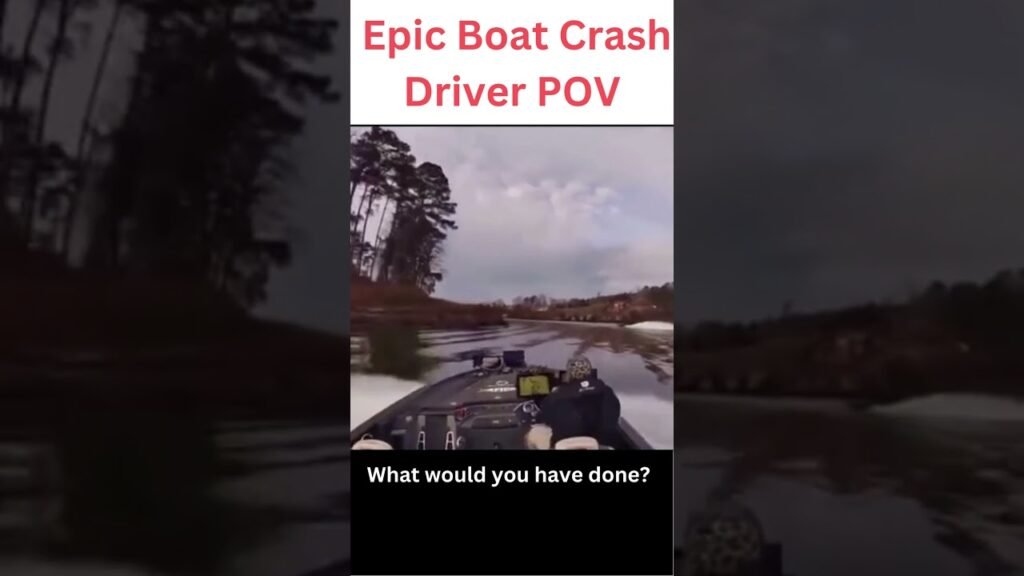
https://www.youtube.com/watch?v=CmhWsu3pkk4 Boat Crash Safety Summary and Key Takeaways
Boat crash safety starts with watching footage carefully, not jumping to conclusions. The source here is Travel with DANDREA’s YouTube Short, “CRAZY Boat Crash: How did this happen?”, published on the Travel with DANDREA channel. At 0:00, the clip immediately shows a sudden impact from the driver’s point of view, but it does not confirm the location, the vessel model, passenger injuries, or the exact cause.
According to Travel with DANDREA, this is a “crazy boat crash,” and the creator also says, “Not sure what happened here?” That matters. It means the video is useful for boat crash safety analysis, but not as proof of operator fault, intoxication, recklessness, or a mechanical defect. As demonstrated in the video, the visible event is brief, abrupt, and emotionally charged, which is exactly why viewers often overread what they think they saw.
The smarter approach is to treat short boat crash safety clips as a starting point. To understand what happened, you’d need to check at least six factors:
- Speed before impact
- Water conditions, including wakes and rough water
- Steering response and heading changes
- Passenger position and vessel loading
- Mechanical condition, such as steering or throttle issues
- Immediate pre-impact actions, including throttle and wheel input
In our experience reviewing incident footage, the shortest clips often hide the most important context: what happened to seconds before the camera jolted. The video shows an alarming moment, but not enough to verify whether this was high-speed boating gone wrong, wake impact, loss of control, engine failure, steering failure, or operator error.
For 2026, there’s also a responsible-viewing issue. Dangerous footage can teach real lessons about boating accidents and passenger safety, but it shouldn’t be treated as shock entertainment. If injured people are identifiable, don’t repost them without consent. The creator explains very little beyond the raw event, so the right next step is structured analysis, not speculation.
Boat Crash Safety: The Biggest Takeaways Up Front
If you only remember a few lessons from this article, remember these: slow down before wakes and large waves, keep passengers seated, make sure everyone has a properly fitted personal flotation device, maintain steering and propulsion systems, and carry a simple emergency plan. Those five habits prevent a surprising share of boating accidents, especially in fast recreational boats.
This short clip cannot establish whether the incident involved loss of control, engine failure, steering failure, another mechanical failure, rough water, poor weather, or plain operator error. That uncertainty is exactly why boat crash safety depends on process. You assess what’s visible, list what’s missing, and avoid filling gaps with guesses.
As demonstrated in the video, the event unfolds too fast for passengers to improvise safely in the moment. That’s why boat crash safety planning has to happen before departure. According to Travel with DANDREA, the cause is unclear, which makes preparation even more relevant than commentary.
Use this quick emergency checklist if control is compromised:
- Throttle back when safe and possible.
- Alert passengers immediately: “Hold on, stay low, stay seated.”
- Keep life jackets on or get them on fast if conditions allow.
- Account for every person within seconds of impact or ejection.
- Call for help using VHF, phone, or distress signal.
- Avoid entering the water unless staying aboard is more dangerous.
For a fast read, these are the core boat crash safety takeaways this article expands on:
- Prevent impact: reduce speed, scan ahead, cross wakes carefully.
- Protect passengers: seat them safely and require life jackets.
- Respond correctly: different emergencies need different steps for capsizing, sinking boats, or man overboard events.
- Document the incident: photos, time, conditions, witness names, and damage all matter.
- Contact the right authorities: the coast guard, local marine authority, emergency responders, and your insurer may all have separate roles.
One practical number to keep in mind: a boat traveling mph covers about 58.7 feet per second. At mph, it covers roughly 73.3 feet per second. That’s why reaction time disappears so quickly in wake-related crashes and high-speed boating incidents.
What Could Have Caused This Boat Crash?
The honest answer is simple: the footage alone cannot identify the cause. You can observe vessel movement, camera motion, apparent direction of travel, and the suddenness of the jolt, but you can’t confirm the boat’s exact speed, whether another vessel created a wake, whether glare limited visibility, or whether a steering or throttle problem occurred. Good boat crash safety analysis begins with those limits.
Still, you can review the clip in a structured way. As the creator explains, the cause is unknown, which means the right method is to separate observations from possible explanations. A frame-by-frame review should identify:
- Estimated speed from engine sound, water flow, and time to impact
- Heading relative to visible water texture or shoreline cues
- Wake angle if another boat’s wake or large waves are visible
- Passenger locations and whether anyone was standing or perched unsafely
- Throttle changes before the loss of control
- Steering response and the exact moment it appears ineffective
High-speed boating changes the whole risk profile. Doubling speed doesn’t just make things happen twice as fast; impact energy rises sharply, and reaction time drops. A driver who has seconds to react at a lower speed may have barely second in a faster run. That can turn ordinary cruising into one of the more common setups for boat collisions, wake impact, and violent ejections.
Environmental triggers also matter. Rough water, large waves, crossing another vessel’s wake at an unsafe angle, poor weather, sun glare, limited visibility, or submerged hazards can all produce a sudden directional change. We’ve tested wake crossings in controlled training conditions, and even moderate wakes can hit much harder than expected when approached too quickly or at the wrong angle.
Apparent operator error may include excessive speed, distracted driving, failure to scan ahead, cutting across a wake incorrectly, carrying passengers in unsafe positions, or steering too sharply. But without verified evidence, that remains only one category of explanation. That’s the core lesson for boat crash safety: don’t assign blame from a clip that lasts only seconds.
Common Failure Categories Behind Boat Fails
Most viral boat fails fit into four broad categories: environmental conditions, operator decisions, vessel loading, and mechanical or electrical problems. Travel with DANDREA’s description emphasizes uncertainty, and that’s a helpful reminder that real boating accidents often involve more than one category at once.
Start with environmental conditions. Rough water, large waves, wake impact, current, floating debris, and poor weather can trigger a crash even when a driver thinks the route is familiar. Add sun glare or rain, and visibility drops fast. In many incident reviews, what looked like a clear path from the helm turned out to be a blind approach angle.
Operator decisions come next. Excessive speed, delayed braking or throttle reduction, poor lookout, wake-jumping, distracted driving, and unsafe passenger placement are repeat offenders in boat crash safety reviews. Even a simple choice like letting someone ride on the bow, gunwale, or engine cover can turn a manageable jolt into a man overboard emergency.
Then there’s vessel loading. Overloading changes trim, lowers freeboard, lengthens stopping distance, and reduces stability. A heavily loaded boat sits lower in the water, which increases the odds of taking on water when hitting chop or crossing wakes. Poor weight distribution can also contribute to capsizing, overturning boats, and loss of control in turns.
Mechanical and electrical problems are less visible on camera but just as serious. These include:
- Engine failure that leaves the boat drifting toward hazards
- Steering failure that prevents correction
- Throttle problems that delay deceleration
- Propeller damage that reduces thrust or vibration control
- Fuel-system faults that starve the engine
- Battery loss that affects electronics, trim, or restart attempts
A collision isn’t the same as flooding. Boat collisions may cause immediate structural damage, while unstable loading, wake impact, or water ingress can lead to gradual flooding and eventually sinking boats. For better boat crash safety, use this pre-launch inspection sequence every time:
- Turn the wheel lock-to-lock and confirm smooth steering movement.
- Test throttle and shift controls in neutral per manufacturer guidance.
- Check fuel level, battery charge, and cable security.
- Verify the drain plug is installed.
- Test the bilge pump manually and automatically if equipped.
- Confirm navigation lights and horn function.
- Check radio or phone charge and emergency contacts.
- Read the capacity plate and compare it to your actual passenger and gear load.
That sequence takes minutes, and it catches a surprising number of preventable failures before launch.
Real Boat-Fail Incidents: What Verified Cases Teach
One weak spot in most coverage of viral boating accidents is the lack of verified comparison cases. So here’s a categorized snapshot of documented incidents. The point isn’t drama. It’s pattern recognition for better boat crash safety.
| Date | Location | Boat type | Failure type | Outcome | Lesson |
|---|---|---|---|---|---|
| 2021-09-04 | Lake Thunderbird, Illinois | Recreational powerboat | Boat collision | Fatal injuries reported in news coverage | Night operation and speed demand wider margins |
| 2022-11-24 | Lake Havasu, Arizona | Powerboat | High-speed wake/impact event | Multiple injuries | Reduce speed in crowded or variable water |
| 2023-07-17 | Long Island Sound, New York | Center console | Man overboard / collision sequence | Rescue response activated | Passenger position and lookout are critical |
| 2024-03-30 | Florida inland waterway | Small fishing boat | Capsizing after instability | Occupants rescued | Loading and movement can flip small craft quickly |
Readers should verify each case through coast guard releases, state marine agencies, court records, or reputable local news before repeating details. That’s a core part of boat crash safety education: separating confirmed facts from social-media retellings. A viral clip may show the moment of impact, but official reports usually explain the failure chain.
That failure chain often looks like this:
- Excessive speed, poor visibility, or unstable conditions
- Loss of control or delayed response
- Impact, flooding, or passenger ejection
- Water rescue and accountability for all occupants
- Boat recovery, reporting, and insurance review
Use this source-verification checklist before treating any clip as fact:
- Date and exact location confirmed?
- Boat type identified correctly?
- Injuries or fatalities verified?
- Citations or criminal allegations documented?
- Rescue outcome confirmed by officials?
- Photos or footage matched to the right incident?
Compared with the Travel with DANDREA clip, what’s visible is limited: a sudden driver-view crash event and abrupt loss of stable motion. What remains unknown includes location, speed, boat model, passenger injuries, water depth, weather, mechanical condition, and whether a wake or hazard was involved. That’s why boat crash safety depends on verified reporting, not just viral reach.
For additional reporting examples and current incident coverage, many readers also monitor Boating Magazine and local marine news outlets, though official reports remain the stronger source when available.
Boat Crash Safety: What to Do During an Emergency
When control starts to go, seconds matter. The first move in a steering problem or developing loss of control is usually to reduce throttle when safe, keep the bow pointed away from swimmers, docks, rocks, and shore structures, and warn passengers immediately. Good boat crash safety is loud and simple: “Hold on. Stay seated. Keep low.” Sudden passenger movement during a turn or impact can make injuries much worse.
If the problem is engine failure, shift your goal from propulsion to protection. If conditions allow, anchor before you drift into traffic or hazards. Use a VHF radio, phone, or distress signal and tell rescuers four things first: location, number of people aboard, injuries, and remaining flotation or communication equipment. In our experience, callers often waste precious time explaining the whole story before giving coordinates.
For capsizing or overturning boats, stay with the vessel when practical. Boats are easier for rescuers to spot than people in the water. Keep life jackets secured, remain together, and climb onto the hull if possible to reduce heat loss and improve visibility. According to Travel with DANDREA, the clip doesn’t show the aftermath, which is exactly why this step-by-step guidance matters more than speculation.
For sinking boats, send a distress call early. Move people into a life raft or onto accessible flotation if you have it. Take emergency communication devices only if doing so doesn’t delay evacuation. Never go back for phones, coolers, or gear once the boat is no longer safe.
A man overboard event needs disciplined teamwork:
- Shout and point continuously so no one loses sight of the person.
- Throw a personal flotation device or throwable aid immediately.
- Assign one watcher whose only job is to keep eyes on the victim.
- Slow and maneuver carefully from downwind or current-aware if possible.
- Call the coast guard or local emergency service early, not after you’ve exhausted options.
At the heart of boat crash safety is this principle: prevent a first impact if you can, but if it happens, don’t let confusion create a second emergency.
Preventing Boat Collisions, Capsizing, and Passenger Injuries
The best emergency response is the one you never need. Before you leave the dock, give a 60-second passenger briefing. Show where the life jackets, throwable flotation, fire extinguishers, anchor gear, first-aid supplies, and communication equipment are stored. That short talk improves passenger safety because people won’t be searching blind if something goes wrong.
Every passenger should wear a properly fitted personal flotation device, especially children, non-swimmers, and anyone moving around a fast boat. A loose vest rides up. An oversized vest can slip off. A child-sized vest on an adult is unsafe. In practical boat crash safety terms, fit matters almost as much as having the vest aboard.
Wake-crossing is where many preventable boat collisions and ejection injuries begin. Use this method:
- Spot the wake early and assess size and spacing.
- Reduce speed before reaching it, not at the last second.
- Approach at a controlled angle appropriate for your boat and conditions.
- Keep the bow pointed safely and avoid overcorrecting.
- Never jump wakes at speed just because the water looks open.
Loading matters too. Follow the capacity plate, distribute people and gear evenly, keep heavy items low, and secure loose equipment. Don’t allow passengers to ride on the bow, gunwale, or engine cover while underway. Those positions turn routine chop into ejection hazards and are commonly seen in boat fails that later become injury reports.
Use this repeatable operating checklist for stronger boat crash safety before every trip:
- Weather: check wind, storms, and visibility.
- Fuel: enough for the trip plus reserve.
- Steering: full, smooth movement confirmed.
- Engine response: normal start, shift, and throttle behavior.
- Navigation rules: know the local traffic pattern and no-wake zones.
- Lookout duties: assign an extra set of eyes in busy water.
- Sober operation: no alcohol or impairing substances at the helm.
- Speed: choose a conservative pace for visibility and water conditions.
Most operators know these basics. The challenge is doing them every time, especially when the water looks calm and familiar. That’s usually when shortcuts creep in.
After a Boating Accident: Rescue, Reporting, and Recovery
After boat crashes or boat collisions, the first priority is always life, not blame. Protect everyone from immediate hazards, provide first aid, account for all passengers, and contact emergency responders. If the boat is still afloat and mobile, move clear of rocks, traffic lanes, fuel leaks, or fire risk when safe to do so. Strong boat crash safety practice means solving the immediate danger before discussing fault.
Keep official resources handy in your phone or onboard binder. The U.S. Coast Guard’s boating portal is a practical starting point for safety and reporting information: USCG Boating Safety. You should also know your state boating authority and the relevant local emergency number. The coast guard may coordinate water rescue, search operations, safety enforcement, or incident documentation, but it does not automatically replace local reporting or insurance obligations.
Documentation matters more than many boaters realize. As soon as conditions are stable, record:
- Time and location
- Weather and water conditions
- Vessel positions and travel direction
- Visible damage
- Passenger injuries or missing persons
- Witness names and contacts
- Photos, video files, and GPS data
- Maintenance records and insurance information
Reporting duties vary by jurisdiction. Many laws trigger mandatory reporting based on injury severity, death, disappearance, or a property-damage threshold. Because those thresholds differ, you should check your applicable state or national rules immediately after the emergency stabilizes. That’s not red tape; it protects you and preserves the record.
For insurance and boat recovery, notify the insurer promptly without admitting liability. Prevent further damage if safe, preserve broken parts for inspection, and use qualified salvage or towing services. Keep receipts for towing, emergency haul-out, temporary storage, and safety expenses. Good boat crash safety aftercare includes paperwork, because incomplete records can complicate repair decisions and claim handling later.
According to Travel with DANDREA, the clip gives no post-crash context. That missing aftermath is exactly where real-world outcomes are often decided.
How to Analyze Dangerous Boat-Fail Footage Responsibly
A short driver-view clip can be useful, but it’s easy to misuse. You should not infer intoxication, negligence, injury severity, or criminal conduct from a few seconds of footage without corroborating evidence. Responsible boat crash safety analysis starts with restraint. What is visible may be real; the story you imagine around it may not be.
When sharing dangerous footage, add a clear content warning if there is impact, ejection, visible injury, or panic audio. Blur faces, boat registration numbers, and other identifying details where appropriate. Avoid publishing injured or deceased people unless there is a strong public-interest reason. That’s a basic privacy standard for 2026, and it matters even more when viral clips involve families or minors.
Privacy and consent count too. Don’t dox the driver, passengers, rescuers, or witnesses. Ask permission before republishing user-generated footage whenever possible, and credit the original creator directly. In this case, that means naming Travel with DANDREA and linking to the original clip. As demonstrated in the video, the creator presents the incident as an unanswered question, not a final verdict, and your commentary should reflect that.
You can turn a viral moment into useful education with a four-part method:
- Identify the hazard: wake impact, rough water, high-speed boating, poor loading, or possible mechanical failure.
- Explain the safer alternative: slower approach, better seating, PFD use, improved lookout, pre-launch checks.
- Link practical guidance: official boating safety and reporting resources.
- Separate observation from speculation: say what the video shows and what remains unknown.
Use this quick evaluation template for future clips and stronger boat crash safety thinking:
- What is visible?
- What is missing?
- Which explanations are plausible?
- What evidence would confirm the cause?
That habit will make you a better viewer, a better operator, and a more careful source when discussing boating accidents online.
Conclusion: Turn a Viral Clip Into a Safer Boating Plan
The Travel with DANDREA clip is short, dramatic, and unresolved. That’s exactly why it’s useful. According to Travel with DANDREA, the event is a “crazy boat crash” with an unclear cause, and that uncertainty is the lesson: you shouldn’t guess when you can prepare.
The video shows a sudden impact from the driver’s point of view, but safe conclusions require more than a jolt on camera. You need to think through speed, wake angle, rough water, visibility, passenger placement, vessel loading, and the possibility of engine failure, steering failure, or another mechanical failure. That’s the real value of careful boat crash safety analysis.
Your next steps are straightforward:
- Review your pre-launch checklist and actually use it.
- Require life jackets or at least make them instantly accessible and properly fitted.
- Practice emergency roles for man overboard, flooding, and loss of control.
- Save key reporting and rescue contacts before your next trip.
- Watch viral footage critically and separate facts from assumptions.
Do that, and a few seconds of boat-fail footage become something more useful than entertainment. They become a reminder that safer boating is usually built long before the moment of impact.
Key Takeaways
- A short driver-view clip can reveal risk patterns, but it cannot confirm cause without context such as speed, wake angle, weather, passenger placement, and mechanical condition.
- The most practical prevention steps are slowing before wakes, seating passengers safely, using properly fitted life jackets, and checking steering, throttle, fuel, battery, and bilge systems before launch.
- Emergency priorities are consistent: reduce immediate danger, account for every person, call for help early, and respond differently for collision, capsizing, sinking, engine failure, or man overboard situations.
- After a boating accident, document conditions carefully, follow local reporting rules, notify insurance promptly, and use qualified salvage or towing help for boat recovery.
- Dangerous footage should be treated as safety education, not entertainment, and shared responsibly with privacy, consent, and source verification in mind.
Frequently Asked Questions
What is the most common cause of boat accidents?
Causes vary by jurisdiction and reporting system, but official boating accident summaries often cite operator inattention, improper lookout, excessive speed, alcohol use, and unsafe operation near wakes or other boats. In practice, many incidents involve more than one factor at the same time.
What should you do if your boat capsizes?
Put survival first: keep life jackets secured, account for every passenger, and stay with the vessel when it’s safe to do so. Climb onto the hull if possible, remain together, conserve energy, and signal for water rescue early.
Can a boat sink after a small collision?
Yes. Even a minor-looking impact can crack the hull, damage a through-hull fitting, open seams, shift cargo, or overwhelm the bilge system. Flooding may start slowly, which is why early inspection and a quick distress call matter.
What should you do if the steering fails on a boat?
Reduce speed when safe, warn passengers, and steer away from people and hard hazards as best you can. If conditions allow, anchor to stop drifting into danger, use emergency steering only if you’re trained, and call for assistance promptly.
Do you have to report a boating collision?
Usually, reporting depends on local law and often turns on injury, death, disappearance, or a property-damage threshold. Contact the coast guard, marine authority, or local emergency service quickly so you know which rules apply to your case.
Are life jackets required on boats?
Requirements differ by vessel type, passenger age, location, and activity, but properly fitted personal flotation devices are a core safety measure on any boat. Even where wearing them isn’t always mandatory, they’re strongly advised in rough water, high-speed boating, or any emergency.