




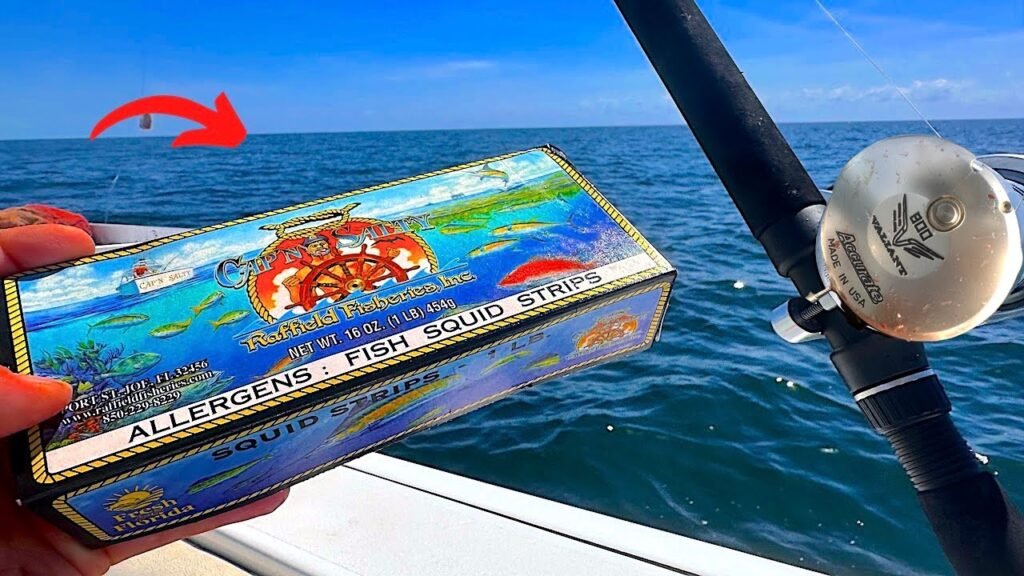
Squid Strips Fishing: The Core Strategy From the Video
Squid strips fishing is the central technique in Bama Saltwater’s solo Gulf trip from Orange Beach, Alabama. The method is deliberately simple: cut durable squid into narrow pieces, place them on a compact dropper rig, locate fish with the sounder, and present the bait at the depth where the marks appear. The trip begins with roughly 6.5 miles to the pass and later takes place about miles offshore, as shown from approximately 00:00 to 01:00 in the original Bama Saltwater video.
Squid works well for bottom fishing because its scent attracts a broad mix of saltwater fish, including vermilion snapper, grouper, porgy, triggerfish, and other marine species. Its firm texture also stays attached to small circle hooks through repeated drops, which makes it more convenient than constantly replacing delicate bait. The creator explains that he uses this approach often because it can produce a mixed bag without complicated tackle.
For a fishing trip, treat squid strips fishing as a practical pattern rather than a guaranteed formula. Reef location, tide, water temperature, current, boat position, fish populations, and regulations can change from one outing to the next. The video demonstrates that squid strips fishing can work for both suspended fish and bottom-hugging species, but you still need to verify local rules and adapt to conditions.

TL;DR: Key Takeaways for an Offshore Fishing Trip
The fastest way to understand squid strips fishing is to focus on depth, sounder marks, and controlled presentation. Bama Saltwater begins around feet of water, identifies fish near old bridge material, and tests both the middle of the water column and the bottom. At roughly 04:00, the creator describes the inverted Christmas-tree-shaped mark that often indicates a school of vermilion snapper suspended above structure.
- Rig: three-loop dropper rig with three 2-ounce circle hooks and a 4-ounce bank sinker.
- Tackle: 30-pound braided main line, 30-pound monofilament leader, and a 30-pound-class bottom rod.
- Presentation: lower halfway down for suspended fish, or touch bottom and crank up three or four turns.
- Hooking: engage the reel and crank steadily instead of jerking the rod upward; finish with a controlled lift-and-reel motion.
A practical squid strips fishing checklist includes checking marine weather and sea conditions, confirming licenses and bag limits, securing hooks and sinkers while running, and carrying pliers and first-aid supplies. If you plan to keep fish, prepare an ice-water brine before the first catch. The video’s simple system is effective because it reduces moving parts while still covering several depths.
- Mark the reef or hard bottom on your fish finder.
- Start where the fish marks appear, not automatically on the seabed.
- Change one variable at a time if bites stop.
Choosing Offshore Fishing Gear for Squid Strips
The video’s gear is a sensible starting point for squid strips fishing: a 30-pound-class bottom fishing rod, 30-pound braid, a 30-pound mono leader, a barrel swivel, three dropper loops, three 2-ounce circle hooks, and a 4-ounce bank sinker. This combination has enough sensitivity to detect small snapper bites while retaining useful shock and abrasion resistance around reef structure.
Braid has a relatively small diameter and transmits movement well, so you can feel a bait fluttering, a sinker touch bottom, or a fish load up. The monofilament leader is thicker and more forgiving around rough structure. The bank sinker keeps the rig down, while the barrel swivel helps reduce line twist as the rig moves in current. If current is strong, you may need to increase weight, reposition the boat, or slow the drift rather than simply adding lead.
Build the rig before leaving the dock. Attach the barrel swivel at the top, space three dropper loops about 10–12 inches apart, add the circle hooks, and connect the sinker at the bottom. The creator also places a loop on the sinker so the weight and hooks can be secured while the boat is underway. In squid strips fishing, that small detail matters: loose hooks and sinkers are a serious solo boat hazard.
For safer boat fishing, add a landing net, dehooking tool, long-nose pliers, cutting tool, spare leaders, and spare hooks. These tools become especially valuable when you encounter grouper, sharks, hardhead catfish, or other spiny and toothy saltwater fish. Medium-heavy tackle is appropriate even when vermilion snapper are the primary target because an amberjack, grouper, or large reef predator may take the same bait.
How to Prepare Squid Strips and Fish the Dropper Rig
Good bait preparation makes squid strips fishing more consistent. As demonstrated in the video around 01:45–02:30, the creator selects thick or rectangular pieces, finds the seam, and cuts through it to create slimmer strips. Narrow bait fits small circle hooks better than a bulky chunk and produces a more natural flutter during the drop.
- Choose a firm, thick section of squid rather than a thin, ragged piece.
- Cut along the natural seam and divide the piece into a narrow strip.
- Thread the strip securely onto the hook shank.
- Leave the hook point and barb fully exposed.
- Trim excessive material so the bait remains streamlined.
The goal is a strip that flutters but doesn’t spin excessively. Squid is convenient and relatively shelf-stable compared with live bait, and the same pieces may survive several drops. Live bait can still be better when selective predators are focused on a particular forage species, while jigs or artificial lures may outperform bait when fish are actively feeding higher in the water column. Casting, trolling, surf fishing, and shore fishing each require different presentations; this is primarily a boat-based bottom-fishing method.
Lower the rig halfway down when marks are suspended. If fish are tight to the reef, reach bottom, then crank up approximately three or four turns and hold the rod steady. The video records an important current lesson: even ounces of lead drifted behind the boat in feet of water. That means squid strips fishing may require a heavier sinker, a slower drift, or a more vertical boat position when current prevents accurate presentation.
Use squid strips fishing as a controlled experiment. Start with the same strip size and depth for several drops, then change only one factor—depth, bait length, hook position, or sinker weight—so you know which adjustment produced the next bite.
Finding Vermilion Snapper and Other Bottom Fish
The primary target in the video is vermilion snapper, commonly called beeliners. The creator explains that these fish often suspend above reefs rather than sitting directly on the bottom. Around 04:00–05:00, he points out an inverted Christmas-tree-shaped school on the fish finder and drops the rig directly into the marks.
Artificial reefs, old bridge material, ledges, wrecks, and other hard-bottom areas concentrate marine species because they provide shelter, current breaks, and feeding opportunities. A single reef can hold vermilion snapper, porgy, triggerfish, red grouper, amberjack, and sharks at different elevations. That variety is one reason squid strips fishing can produce an unexpected mixed bag.
Repeated drops produce several beeliners in the video, including fish estimated at roughly three-quarters of a pound and one pound. The same three pieces of squid remain on the rig through multiple catches, showing how durable the bait can be. The creator also notes that one lower hook seems more productive when strong current holds the fish close to the bottom.
Adjust your depth by species rather than assuming every fish feeds in one zone:
- Vermilion snapper: often suspend above structure.
- Red grouper: commonly remain close to the bottom and may take bait near the reef.
- Porgy: may occupy mixed reef habitat and feed at several levels.
Mark the structure, watch whether bites happen on the fall or near bottom, and record the productive depth. If current carries the rig away from the fish, reposition the boat before abandoning the spot. Effective squid strips fishing depends as much on putting bait in the correct water as on choosing the bait itself.
Reading Conditions: Depth, Temperature, Current, and Weather
The trip provides a useful case study for squid strips fishing. The first spot is approximately feet deep, with water temperature near 66°F. Later, the creator references feet of water and explains that strong current is pulling even ounces of lead behind the boat. These numbers describe one outing—not universal targets for every Gulf fishing trip.
Water temperature affects fish metabolism, seasonal movement, feeding intensity, and preferred depth, but it isn’t a magic number. Structure, tide, bait presence, sunlight, oxygen, and current can matter just as much. A 66°F reading may produce one pattern near Orange Beach, while a nearby reef or a different season produces another. Record temperature in your logbook, then compare it with actual fish location.
Current creates several problems for bottom anglers. It angles the fishing line away from the boat, drags bait off the reef, makes subtle bites harder to detect, and may cause multiple rigs to tangle. Before adding excessive weight, ask whether the boat can hold position. If the line angles sharply, the sinker won’t stay near structure, or you can’t distinguish a bite from bottom contact, change your anchoring or drift tactic.
Before leaving shore, check wind direction, wave height, lightning risk, marine forecasts, and small-craft advisories. The relatively calm conditions shown by Bama Saltwater should never be treated as a promise for your own offshore trip. For squid strips fishing, choose a conservative weather window and keep checking conditions after departure. A safer decision rule is simple: if the boat cannot hold position or the sea exceeds your boat and crew’s ability, move inshore or turn back.
Those same principles apply to sea fishing, deep-sea fishing, coastal fishing, and other forms of saltwater fishing. The ocean rewards preparation, but it punishes overconfidence.
Unexpected Catches: Grouper, Porgy, Catfish, and Dolphins
One advantage of squid strips fishing is that you aren’t limited to a single species. After several vermilion snapper, the video produces a red grouper. The creator observes shrimp in its mouth and an inflated-looking stomach, suggesting the fish had been actively feeding on bottom prey. Because the grouper appears undersized, he releases it rather than treating an exciting catch as an automatic keeper.
Species identification and size verification are essential on mixed reefs. Snapper, grouper, porgy, triggerfish, amberjack, and other saltwater fish can share one structure while having different seasons, minimum lengths, and bag limits. Keep a current identification guide aboard, measure fish on a flat ruler, and release uncertain catches until you confirm the rule.
The video also features a porgy that the creator considers a keeper and places in the cooler. He explains that porgy are related to sheepshead and pinfish because all belong to the porgy family. Porgy are often overlooked table fish, but you should still check local regulations and handle them carefully to preserve the meat.
A hardhead catfish creates a safety lesson. Its dorsal and pectoral fin spines can inject painful toxin, and the creator describes significant stinging after being poked. Never grab a hardhead by hand. Use long-nose pliers or a dehooker, keep your fingers away from the spines, and cut the leader if safe removal is impossible.
A dolphin later takes a hooked fish and follows the boat. According to Bama Saltwater, the encounter is frustrating but part of fishing in the animal’s home. Don’t feed, chase, or harass dolphins. Retrieve hooked fish promptly, avoid leaving scraps in the water, and accept that squid strips fishing can attract bycatch and depredation as well as intended targets.
Circle Hooks, Fish Handling, and Responsible Saltwater Fishing
The creator’s circle-hook advice is one of the most transferable lessons from squid strips fishing. When a fish bites, resist the instinct to set the hook with a hard upward jerk. Engage the reel, crank steadily, and then use a controlled lift-and-reel motion. This allows the circle hook to rotate into the corner of the fish’s mouth, as shown around 08:00–09:00.
Corner-hooked fish are generally easier to release than deeply hooked fish, but circle hooks don’t remove the need to follow local rules. Some fisheries require non-offset circle hooks, restrict certain baits, or impose special equipment requirements. Check the applicable rule before fishing, not after catching a protected species.
- Keep the fish in the water whenever possible.
- Wet your hands before touching it.
- Support the fish’s body and avoid squeezing the belly.
- Use pliers to remove a visible hook quickly.
- If the hook is deeply lodged, cut the leader rather than causing more damage.
- Face the fish into the current and release it only after it regains strength.
For retained fish, the video demonstrates an ice-slush method at approximately 19:00–20:00. Add seawater to a cooler, mix in ice, and chill the catch through full contact with the cold brine. This cools fish more evenly than leaving it on top of dry ice and helps protect quality during the ride home.
Responsible squid strips fishing also means using only the bait you need, collecting discarded line and hooks, releasing undersized or out-of-season fish, and using a fishing net only when it improves control without damaging sensitive species. Good catch and release protects future trips while careful cooling improves the fish you legally keep.
Regulations, Safety, and Solo Boat Fishing Preparation
Regulations discussed in the video are trip-specific observations, not universal rules for every angler. The creator mentions a 10-fish-per-person limit and a 10-inch minimum for vermilion snapper, but rules can change by year, location, season, and jurisdiction. Before a squid strips fishing trip, consult the NOAA Fisheries Southeast recreational fishing regulations and the Alabama Department of Conservation and Natural Resources for licenses, seasons, bag limits, size limits, reef zones, and protected species.
State waters and federal waters may have different requirements. Species identification matters when several fish share a reef, and possession limits can apply across the boat rather than only to the person holding the rod. Carry measuring equipment, keep a current regulation reference, and photograph uncertain fish for later identification before deciding to keep them.
Solo offshore fishing requires more preparation because nobody is available to steer, manage a hooked fish, or respond if you are injured. Use this checklist:
- Wear a properly fitted life jacket or personal flotation device.
- Carry a charged VHF radio and a phone in a waterproof case.
- File a float plan with your destination, boat, route, and return time.
- Secure fishing rods, reels, hooks, and sinkers while underway.
- Bring navigation equipment, first-aid supplies, sunscreen, drinking water, and emergency signaling gear.
- Keep pliers and a cutting tool immediately accessible.
Never lay a loaded rod across the deck where you can trip over it, and don’t handle spiny fish barehanded. Monitor wind, waves, and storms continuously. Effective squid strips fishing ends when conditions become unsafe—not when you reach a personal catch goal. Conservative decisions are especially important when you are the only person aboard.
A Repeatable Plan for Your Next Squid Strips Fishing Trip
Turn the video into a repeatable workflow for squid strips fishing, rather than trying to copy one exact spot. Choose a legal reef or hard-bottom area, check marine weather and tides, prepare narrow squid strips, rig three circle hooks, and mark structure and fish on the sounder. Begin at the depth where the marks appear; don’t assume the first drop must reach bottom.
- Plan: confirm the forecast, tide, fuel range, licenses, seasons, and bag limits.
- Prepare: cut bait, tie dropper rigs, inspect knots, and secure spare leaders.
- Locate: identify hard structure and look for suspended or bottom-hugging marks.
- Present: lower halfway down or to bottom, then retrieve three or four cranks.
- Observe: note whether bites occur on the fall, during the pause, or close to the reef.
- Adjust: change one variable at a time and record the result.
- Handle: release protected fish quickly and place legal keepers into an ice-water brine.
Keep a logbook with date, water temperature, depth, current strength, tide stage, bait size, hook position, and species caught. If bites stop, change depth first, then bait size or hook position, and only afterward alter boat position or sinker weight. That order helps you identify what actually improved the presentation.
Set a stopping point for heat, fatigue, worsening weather, or unsafe fish handling. The broader lesson from Bama Saltwater is that basic bottom fishing can produce beeliners, porgy, grouper, and surprises, but preparation determines whether the trip is productive and sustainable. Use squid strips fishing as a flexible tool within responsible saltwater fishing—not as a substitute for local knowledge, safe boating, or current regulations.
Video Summary and Practical Key Takeaways
Bama Saltwater’s video, Fishing SOLO Offshore With SQUID STRIPS and Hooked Into THIS! Multiple Species, shows how a modest rig can cover a broad range of offshore fishing situations. The trip begins near Orange Beach, reaches about miles offshore, and produces vermilion snapper, a red grouper, a porgy, a hardhead catfish, and an encounter with a dolphin. The creator explains that the appeal is its simplicity: durable bait, manageable tackle, and close attention to the fish finder.
For beginners, the strongest lesson is not simply to copy the 4-ounce sinker or three-hook arrangement. Instead, learn the process: locate structure, identify where fish sit above or near it, keep bait attached, and adjust when current changes the presentation. The circle-hook technique, careful handling, ice-slush cooling, and solo safety preparation are equally valuable.
In 2026, regulations and environmental conditions may differ from those shown in the recording. Check current authorities before departure, carry appropriate safety equipment, and treat every catch as part of a larger marine ecosystem. Whether you normally practice shore fishing, surf fishing, casting, trolling, or boat fishing, squid strips fishing offers a useful example of how a simple bait can support thoughtful, species-aware sea fishing.
Key Takeaways
- Use narrow, durable squid strips on a three-loop dropper rig with exposed circle-hook points.
- Read the fish finder: vermilion snapper may suspend in an inverted Christmas-tree pattern above reef structure, while grouper often stay near bottom.
- Start with a 4-ounce sinker but change boat position, drift speed, or weight when current pulls the rig away from the reef.
- Handle fish with pliers, release undersized or protected catches quickly, and chill legal keepers in an ice-water brine.
- Check current NOAA and Alabama regulations, marine weather, safety equipment, and solo-trip procedures before leaving shore.
Frequently Asked Questions
Is Egypt good for fishing?
Egypt can offer productive fishing in the Mediterranean Sea, Red Sea, Nile River, and inland lakes. Conditions vary by destination, season, licenses, and local conservation rules, so you should check regulations and use a qualified local guide.
What fish is popular in Egypt?
Popular Egyptian catches include Nile perch, tilapia, mullet, sea bream, grouper, snapper, and tuna, depending on the region. The Red Sea is known for diverse reef fish, while inland waters commonly produce tilapia and Nile perch.
What fish are in the Lake of Egypt?
Egypt’s lakes contain species such as tilapia, mullet, catfish, sea bream, and other locally established fish. The exact species list depends on the lake, water connection, stocking history, and fishing zone.
What sea creatures are in Egypt?
Egypt’s Red Sea and Mediterranean waters support dolphins, sea turtles, rays, sharks, coral reef fish, octopuses, crustaceans, and many other marine species. You should observe protected wildlife without feeding, touching, chasing, or harassing it.
How do you fish squid strips offshore?
Cut thick squid into narrow strips, thread each strip onto an exposed circle hook, and fish the rig around hard structure. Lower halfway down for suspended fish or reach bottom and reel up three or four turns, adjusting for current and fish-finder marks.
What tackle is used for squid strips fishing?
The video uses a 30-pound-class bottom rod, 30-pound braid, a 30-pound monofilament leader, three 2-ounce circle hooks, a barrel swivel, and a 4-ounce bank sinker. Carry heavier options when strong current or larger grouper, amberjack, or sharks are possible.
Should you set a circle hook with a hard jerk?
No. Engage the reel and crank steadily so the circle hook can rotate into the corner of the fish’s mouth, then use a controlled lift-and-reel motion. A hard upward strike can pull the hook away before it seats properly.