




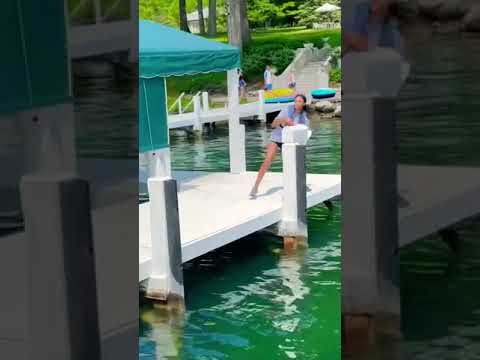
https://www.youtube.com/watch?v=smIVqROh6Eg Summary: Why Mail Delivery by Boat Can Go Wrong
Mail delivery by boat looks simple until the last few seconds. That is the central lesson from TPECK’s short video, where a routine-looking drop appears to fail almost instantly at the transfer point. The creator shows, in roughly the first seconds, that moving an item across water is only part of the job. The real risk sits at the handoff, where vessel position, shoreline access, timing, and recipient readiness all have to line up.
According to TPECK, the power of the clip is visual rather than verbal. There is no long setup, no formal explanation, and no technical commentary. As demonstrated in the video from about 0:00 to 0:05, you see a boat approach and an attempted delivery unfold fast enough that any small misjudgment becomes visible right away. That matters because many people think of transport as the hard part, when in practice the final transfer can be the most failure-prone moment.
You should also be careful not to claim more than the footage proves. The video does not establish the value of the item, whether the operator was part of an official postal route, whether the package was urgent, or what happened after the failed moment. As TPECK’s short shows between 0:05 and 0:15, the useful takeaway is operational: control was lost during the handoff window. In logistics terms, that is enough to study. It is a compact case study in how a drop can fail when distance, motion, and human coordination are compressed into a few seconds.
- Visible facts: a boat, a shoreline recipient area, an attempted transfer, and a failed outcome.
- Unknowns: official carrier status, package contents, recovery result, and exact intent.
- Main lesson: the shortest stage of delivery can carry the highest practical risk.
What TPECK’s Boat Delivery Fail Reveals
TPECK’s short reveals something that delivery planners already know but many viewers don’t: a successful transfer is a chain, not a throw. The creator’s footage makes that plain from the opening second. A boat has to arrive at the right angle, at the right speed, at the right distance from shore, while the recipient is also positioned safely and ready to receive. If any one link breaks, the item can miss the target, fall into the water, or force someone into an unsafe recovery attempt.
As demonstrated in the video at about 0:00, the scene is ordinary enough that you can imagine this kind of drop happening often in waterfront communities. That familiarity is exactly why the clip is useful. It turns an everyday-looking action into a reminder that routine conditions can still produce failure. The video shows the final moments, not the broader route, which is why the short works best as a visual example of last-mile risk rather than proof of a full transport system.
You can break the failure exposure into four visible or likely factors:
- Distance management: even a gap of to feet can matter when both people and vessel are moving.
- Momentum: a light package or envelope can keep traveling after release instead of dropping cleanly into reach.
- Surface instability: shore footing may be uneven, wet, or lower than expected compared with the boat deck.
- No recovery margin: once the item leaves the boat without secure control, options shrink fast.
According to TPECK, or more precisely according to what the creator’s footage makes visible, the point is not dramatic spectacle. It is that a normal-looking handoff can fail in under seconds. That is why you should treat mail delivery by boat as a coordinated transfer problem, not just a transportation problem. The approach can be sound, the route can be familiar, and the final drop can still go wrong.
TL;DR: The Key Takeaways
If you only need the practical lesson, here it is. First, a boat does not remove last-mile delivery problems; it simply shifts them to the shoreline. Second, the handoff is the most vulnerable moment because movement, balance, distance, and communication all converge there. Third, convenience should never outrank control of the item. A fast pass that saves seconds can create a failed delivery, water damage, or a personal safety risk that costs far more.
The short clip is valuable because it exposes issues people often overlook when they think only about transportation. From about 0:05 to 0:15, the failure window appears to involve several physical realities at once: changing distance between boat and shore, package momentum after release, limited reach, and the possibility that retrieval becomes difficult the instant the item is no longer held securely. Those are not abstract concerns. In small-craft operations, even modest wakes and wind shifts can alter position by inches or feet in seconds.
For readers, the practical guidance is straightforward:
- Use waterproof packaging. Paper mail can be ruined in seconds if it enters the water.
- Confirm the recipient’s exact position. Don’t assume they can move safely at the last moment.
- Maintain a stable transfer point. A dock or fixed platform is usually safer than an improvised shoreline stance.
- Create a recovery plan before the attempt. If the item drops, you should already know whether retrieval is possible and safe.
In our experience reviewing short-form delivery clips like this, the most revealing failures are the ones that happen quickly and without explanation. Why? Because they strip the process down to its weakest link. TPECK’s short does that effectively. It reminds you that control matters more than speed, and that mail delivery by boat succeeds only when the final transfer is designed, not improvised.
How Mail Delivery by Boat Actually Works
Mail delivery by boat is not one action. It is a chain of stages, each with its own failure points: sorting, loading, navigation, arrival, transfer, confirmation, and return or onward movement. When you watch TPECK’s short, you only see the end of that chain, roughly 0:00 to 0:15. But the failed handoff makes more sense when you place it inside the full workflow. If loading was rushed, packaging weak, or arrival poorly planned, the final transfer becomes even more fragile.
It also helps to separate three different scenarios that people often blur together:
- Scheduled marine mail route: a planned water route serving places where waterways are part of normal access.
- Ordinary post carried by a vessel or ferry: the boat handles transportation, but not necessarily direct handoff to the end recipient.
- Informal boat-to-shore transfer: a localized handoff, often dependent on moment-to-moment positioning and judgment.
You shouldn’t assume these scenarios share the same accountability, handling standards, or safety controls. A formal route may involve designated transfer points, logs, and documented custody. An informal transfer may rely mostly on local knowledge and timing. As the video shows, the difference matters because control can be lost after a sound route but before confirmed receipt.
Here is a simple process diagram in numbered form:
- Before departure: package is sorted, protected, labeled, and secured onboard.
- During approach: vessel speed, heading, current, and distance are managed.
- During transfer: the item changes hands or changes surfaces. This is the highest-risk moment.
- After release: receipt must be confirmed before the boat moves away.
That final step is where many failures hide. If the item leaves the boat but is not clearly in the recipient’s possession, custody is uncertain. For packaging and shipping basics, USPS provides practical consumer guidance at https://www.usps.com/ship/. While TPECK’s short does not explain the full logistics chain, the creator’s footage clearly demonstrates that the transfer stage can undo everything that went right before it.
Why a Boat-Based Mail Handoff Can Fail
A boat-based handoff can fail for reasons that are simple, physical, and easy to underestimate. TPECK’s clip makes several of them visible or strongly implied between 0:05 and 0:15: the vessel is moving, the landing point may not be fixed, the distance changes as the boat shifts, and the recipient has only limited reach. If the item drops into the gap between boat and shore, failure becomes immediate. That gap may be only a few feet, but on water, a few feet is often the whole problem.
Environmental conditions can shrink the delivery window even when the route feels familiar. A light crosswind can alter the path of a small package. Current can pull the hull off line during the last approach. Wake from the boat itself can bounce the vessel off its ideal position. Tides change vertical alignment between deck and shoreline. Rain reduces grip, and poor visibility makes signaling harder. None of these factors need to be dramatic to matter. Small-craft operators often know that a change of just a few degrees in approach angle or a short drift interval can make a transfer awkward instead of clean.
You should distinguish operational errors from environmental causes:
- Operational: too much approach speed, poor positioning, unclear communication, throwing instead of transferring, weak packaging.
- Environmental: wind gusts, current set, wave action, tide height, slippery footing, glare or rain.
In practice, failures usually involve both. For example, a light envelope plus a drifting boat plus a rushed release is not one mistake; it is a stack of small risks. According to TPECK’s footage, that stack can collapse in seconds. The lesson for you is direct: don’t judge a water delivery only by whether the route is possible. Judge it by whether the handoff can be controlled from first contact to confirmed possession.
The Most Vulnerable Point Is the Final Handoff in Mail Delivery by Boat
The final handoff deserves most of your attention because it compresses navigation, timing, package handling, and human coordination into a tiny window. That is exactly what TPECK’s short captures. From about 0:05 to 0:15, the ordinary-looking delivery attempt becomes a reminder that the last movement is often the decisive one. Everything before that point can be competent, and the result can still fail if the transfer itself is poorly designed.
A secure landing zone matters more than simply getting close. Consider the difference between four common receiving points:
| Receiving point | Stability | Risk level |
| Dock | Fixed height and edge | Lower |
| Fixed platform | Predictable footing | Lower to moderate |
| Beach | Variable slope and footing | Moderate |
| Improvised shoreline position | Uneven, wet, uncertain reach | Higher |
If you are planning a transfer, use a controlled procedure rather than improvising:
- Stop or stabilize the vessel as much as conditions allow.
- Confirm readiness with verbal or visible signals.
- Use a waterproof container or tether when the item is light, important, or damage-sensitive.
- Transfer one item at a time so nothing is released early.
- Verify possession before backing away or turning the boat.
As demonstrated in the video, once the item is out of secure control, your options narrow fast. You can’t rely on hope, reach, or a last-second grab. According to TPECK, or more precisely according to the creator’s footage, an ordinary-looking attempt becomes a practical lesson in reliability design: handoff quality determines outcome. If the transfer point is unstable, the delivery is unstable, no matter how short the route was.
How to Make Mail Delivery by Boat Safer
If you need to plan mail delivery by boat, the safest improvements are procedural, not dramatic. Start before departure. Inspect conditions, choose the transfer point, protect the item, establish communication signals, and decide what happens if the handoff fails. That preparation can take five minutes, but it prevents the kind of split-second loss TPECK’s short makes memorable.
Use this step-by-step checklist:
- Inspect conditions: check wind, current, wake, visibility, and footing at the receiving point.
- Choose a stable transfer point: prefer docks or fixed landings over loose shoreline edges.
- Protect the item: double-bag paper contents, add a sealed outer pouch, and keep labels readable.
- Establish signals: agree on stop, ready, transfer, and abort cues before approach.
- Confirm recovery options: know whether the item can be retrieved safely if dropped.
Packaging is not a minor detail in marine settings. Paper mail can wick water quickly, adhesives can fail, and unreadable labels complicate claims and redelivery. A smart setup includes inside-and-outside identification: one label on the outer waterproof layer and another inside it. That way, even if the exterior is damaged, the item still carries destination data.
You should also set stop conditions in advance. Abort the transfer if wind is excessive, current is pushing the vessel off line, visibility is poor, the recipient is standing in an unstable place, or the handoff requires anyone to lean beyond a safe stance. The basic rule is simple: preserve control of the item at all times. No package is worth a person slipping off a dock or falling overboard. TPECK’s footage works because it shows how quickly a normal-looking attempt can cross from convenient to unreliable.
What to Do When a Boat Delivery Goes Wrong
When a delivery fails on the water, your first job is not recovery. It is safety. If a package drops, protect people first. Stop the vessel if doing so is safe, keep clear of propellers and unstable edges, and do not enter dangerous water for an item that may already be lost or damaged. The video does not provide enough information to confirm the exact recovery outcome, so it should be used as a case study in response priorities rather than blame.
A practical immediate response sequence looks like this:
- Stabilize the situation: bring the boat under control or hold position if safe.
- Mark the last known location: use landmarks, phone notes, or GPS if available.
- Communicate with the recipient: confirm what they saw and whether the item was briefly in reach.
- Avoid unsafe retrieval attempts: no sudden jumps, no overreaching, no blind grabs near the hull.
- Document the incident: time, location, weather, package type, and witnesses.
Documentation matters more than many people realize. Record the delivery stage at which control was lost, the package description, whether the label remained visible, and any environmental conditions such as rain, glare, wind, or wake. Those details help separate a failed receipt from a damaged item or a complete loss.
If the shipment is connected to a carrier or postal process, contact the responsible service rather than attempting a second rushed drop. For general domestic shipping support and packaging guidance, USPS maintains consumer resources at USPS Ship. According to TPECK’s short, the key operational lesson is that a failed handoff unfolds quickly. Your response should be the opposite: calm, documented, and controlled.
What This Viral Short Gets Right About Last-Mile Logistics
The short gets one big thing right about last-mile logistics: the hardest part is often not moving an item most of the distance. It is completing the final handoff accurately and safely. TPECK does not need a long explanation to make that point. The creator uses a brief failure, and that brevity works. You see how a plan that looks fine from afar can break down at the exact moment when delivery should become easiest.
This matters beyond one clip. Remote islands, floating homes, waterfront properties, flood-affected neighborhoods, ferry-served communities, and places without reliable road access all face versions of the same problem. Water transport may solve the route challenge while creating a transfer challenge. A boat can close 99% of the distance, but the final 1% may still decide whether the item arrives dry, intact, and in the right hands.
In plain terms, last-mile risk comes from three things:
- Accuracy: the item has to reach the correct person or surface.
- Timing: both parties must be ready at the same moment.
- Control: physical custody cannot become ambiguous during release.
In 2026, tracking systems, phone alerts, digital proof-of-delivery tools, and location sharing can improve accountability. They can tell you when a boat is near, when a transfer is expected, and who was notified. But they cannot replace a stable physical handoff. As demonstrated in the video, the package still has to move from one set of hands or surfaces to another without loss. According to TPECK, the strongest communication choice here is showing the failure plainly. You don’t need theory to understand the lesson once you’ve watched those few seconds.
A Practical Checklist for Planning Mail Delivery by Boat
If you want a simple planning tool, use this checklist before any mail delivery by boat attempt. It is especially useful for documents, medication, electronics, legal notices, or any item that would be hard to replace. The goal is not speed. The goal is to make sure the transfer can be completed without rushing, stretching, or guessing, which is the core lesson TPECK’s short leaves with viewers.
Pre-departure checklist:
- Route: know the approach path, distance off shore, and likely receiving point.
- Tide or current: confirm how water movement will affect final position.
- Weather: check wind, rain, glare, and visibility.
- Vessel stability: confirm the boat can hold a controllable approach.
- Package protection: waterproof outer layer, internal label, secure closure.
- Recipient location: confirm exactly where they will stand and whether footing is stable.
- Communications: phone, hand signals, or verbal cues for ready, wait, and abort.
- Emergency contacts: know whom to call if the delivery fails or the item is damaged.
Before carrying anything important, test the method with an empty container or low-value object. That small rehearsal reveals whether the angle is awkward, whether the recipient can reach safely, and whether the boat drifts too quickly during transfer. In our experience, one test run often exposes problems that no amount of assumption would catch.
Set clear go/no-go criteria: the vessel must remain controllable, the recipient must have stable footing, the package must stay secured until receipt is confirmed, and a retrieval method must exist if the item drops. If any of those fail, postpone. The simplest rule from the video still stands: if the handoff cannot happen without rushing, leaning, or guessing, it should not happen yet.
Can Mail Be Delivered by Boat?
Yes, mail can be transported by boat when waterways are part of an established route or when a vessel is the most practical way to reach a destination. That may include islands, isolated shorelines, or places where road access is limited or disrupted. The exact process depends on the carrier, the location, the vessel, and the transfer point.
TPECK’s short shows the challenge of delivery, but it does not confirm whether the specific attempt was an official postal operation. As demonstrated in the video, what you can say with confidence is that the handoff stage itself can fail even when the boat reaches the destination area.
Why Would Mail Be Transported by Boat Instead of Road?
Boats may be necessary or practical for islands, waterfront settlements, flood-affected regions, ferries, and communities separated from normal road networks. In those cases, water transport can be the most direct route and sometimes the only route available.
That said, route efficiency does not eliminate handoff risk. A boat may solve the distance problem while creating a more difficult final transfer problem, especially when there is no dock, platform, or stable receiving area.
What Should You Do If a Package Falls Into the Water?
Protect people first. Do not jump into dangerous water or reach unsafely around the hull for a package. If safe, stop the vessel, mark the last known location, communicate with the recipient, and document what happened.
Then contact the carrier or responsible party promptly with tracking details, package description, and the time and location of the incident. Waterproof packaging and redundant labeling are the best preventive steps for anything that may be exposed to marine conditions.
Is Throwing Mail From a Boat Ever a Good Idea?
Usually, no. Throwing introduces extra momentum, uncertainty, and bounce risk, especially with light packages, envelopes, or uneven shorelines. Even if the distance is short, the item can miss, slide, or land in water.
A controlled hand-to-hand or container-based transfer is more reliable. TPECK’s footage underlines that once the item leaves secure control, the chance to correct the outcome may disappear almost immediately.
What Packaging Works Best for Marine Deliveries?
Use a layered approach: inner protection for the contents, a sealed waterproof outer pouch, and clear identification both inside and outside the waterproof layer. Paper items should be double-bagged or placed in a rigid weather-resistant sleeve if possible.
This matters because water damage happens fast and exterior labels can smear or detach. Good packaging does not guarantee success, but it improves the odds if the handoff is delayed, dropped, or exposed to spray.
When Should a Boat Delivery Be Postponed?
Postpone when the vessel cannot maintain a stable approach, the recipient does not have secure footing, visibility is poor, wind or current is pushing the boat off line, or the transfer requires overreaching. If anyone has to rush or guess, conditions are already too weak for a reliable handoff.
That rule is simple, but it is also the most practical takeaway from the clip. A delayed delivery is inconvenient. An uncontrolled delivery can become a loss event or a personal safety problem.
Final Thoughts: The Lesson From This Mail Delivery by Boat Fail
TPECK’s short works because it turns a tiny moment into a useful logistics lesson. You do not need a long explanation to see what matters. The route may be possible, the destination may be close, and the attempt may look routine, but the delivery still depends on a controlled final transfer. That is the point the creator’s footage makes most clearly between 0:00 and 0:15.
If you take one practical idea from this article, make it this: design the handoff before you attempt it. Choose a stable receiving point, protect the package from water, confirm the recipient’s position, agree on communication signals, and verify possession before the boat moves away. Those steps are simple, but each one preserves control. And control is what the failed drop appears to lose.
For your next steps, keep the process concrete:
- Review the original clip at TPECK’s video and watch the transfer moment closely.
- Use the planning checklist in this article before any shoreline handoff.
- Prepare waterproof packaging using practical shipping guidance from USPS.
- Set firm no-go conditions so convenience never pushes you into an unsafe transfer.
As demonstrated in the video, the last few seconds can decide everything. That is why mail delivery by boat should always be treated as a full-chain coordination task, not just a ride across the water.
Key Takeaways
- A boat solves transportation distance, but the final shoreline transfer remains the weakest point in the delivery chain.
- The failed handoff in TPECK’s short shows that timing, positioning, momentum, and footing can turn a routine drop into a loss within seconds.
- Safer mail delivery by boat depends on waterproof packaging, clear communication, a stable transfer point, and confirmed possession before departure.
- If a delivery goes wrong, protect people first, document the incident carefully, and contact the responsible carrier instead of attempting a second rushed drop.
- The simplest rule is also the most useful: if the handoff requires rushing, stretching, or guessing, postpone it.
Frequently Asked Questions
Can mail be delivered by boat legally and practically?
Yes, mail can be carried by boat when waterways are part of a regular route or when a vessel is the most practical access method. The exact rules and procedures depend on the carrier, the route, and whether the final handoff is formal or informal.
Does the TPECK video prove this was an official postal delivery?
No. The short shows an attempted delivery and an apparent failure, but it does not establish whether the operation was officially sanctioned by a postal service or another carrier. The safest reading is to treat it as a visual example of handoff risk.
Why is the final handoff more dangerous than the boat trip itself?
Because the final transfer compresses motion, distance, timing, and human coordination into a few seconds. Even a stable route can end badly if the recipient is poorly positioned, the boat drifts, or the package leaves secure control too early.
What is the safest way to transfer mail from a boat to shore?
Use a stable receiving point, slow or stabilize the vessel, confirm both parties are ready, transfer one item at a time, and verify possession before moving away. Waterproof packaging or a tethered container can add a useful margin when conditions are less than ideal.
What should you do first if a package falls into the water?
Prioritize people, not the package. Stop the vessel if safe, mark the last known location, communicate with the recipient, document the incident, and avoid dangerous retrieval attempts near propellers, currents, or unstable shorelines.
What kind of packaging is best for mail delivery by boat?
A layered waterproof setup works best: protect contents internally, add a sealed outer pouch, and place identification both inside and outside the waterproof layer. This is especially important for paper documents, medications, and electronics.