




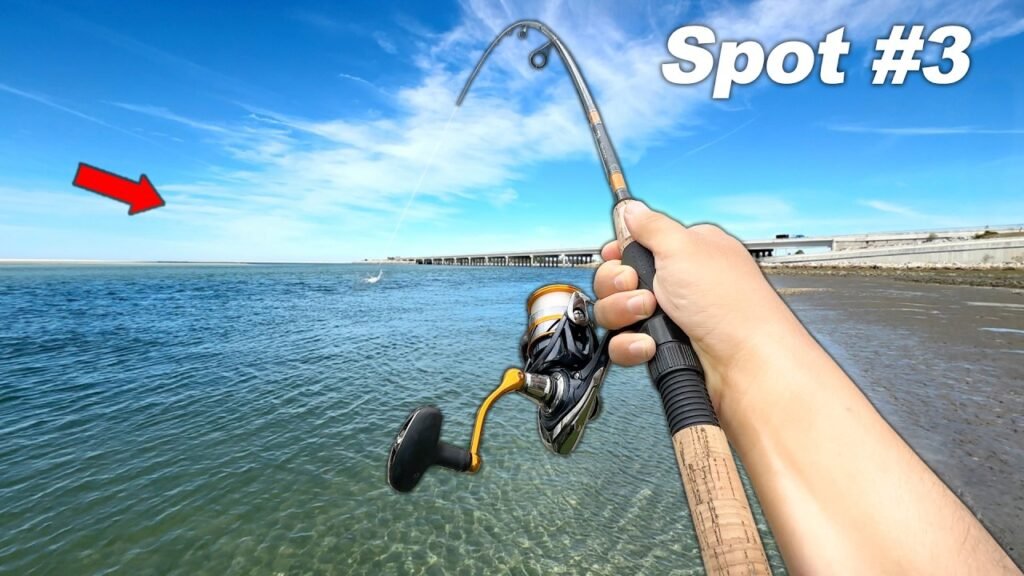
TL;DR: Key Takeaways From This Saltwater Shore Fishing Trip
Saltwater shore fishing can produce quality inshore fish when you combine map scouting, moving water, clear conditions, and a willingness to walk. In FirstStateFishing’s North Florida video, I Tried Fishing RANDOM Shore Spots… One was LOADED, the creator starts on a cold “foot mission” around 0:00–1:10 with nothing more complicated than rods, water, artificial lures, and a few shore spots he had only seen on Google Maps.
The core lesson is simple: don’t wait for perfect boat weather. The creator explains that 39°F wind and cold water made a kayak or boat trip less appealing, so he chose land-based inshore fishing instead. That decision paid off. Around 8:40, the video shows the first speckled trout, and around 10:30–11:45 he lands a keeper-size trout over the 15-inch minimum he mentions. Later, near 18:40, the same shore-based pattern produces a trout he estimates at roughly inches.
- Scout first: use satellite maps to find public access, creek bends, drains, oyster bars, and drop-offs.
- Fish moving water: the outgoing tide in the video pulled bait toward deeper edges where trout were waiting.
- Start simple: a 3-inch paddle tail on a quarter-ounce jig head caught multiple trout.
- Dress for the spot: boots, waders, or ray protection can matter when oysters, cold water, and stingrays are possible.
- Stay mobile: if one shoreline looks dead after 10–15 minutes, keep walking until you see bait, current, or life.
For 2026, this is still one of the most practical ways to learn saltwater fishing without paying for offshore fishing, deep sea fishing, or a boat ramp routine. You’re reading water, not just casting randomly.

Why Saltwater Shore Fishing Works When the Weather Gets Tough
Saltwater shore fishing shines when wind, cold, or rough water makes boat fishing a poor choice. At 0:00–0:45, FirstStateFishing says the real-feel temperature is 39°F and that it’s windy, which pushes him toward a bank-beating mission instead of a kayak outing. That’s a smart call. A 15–20 mph wind can make kayak positioning difficult, create unsafe chop in open bays, and turn light artificial lure fishing into a fight against line bow.
Shore-based fishing gives you more options than many beginners realize. You can fish beaches, marsh banks, bridges, piers, jetties, oyster bars, seawalls, public trails, tidal creeks, and causeway pull-offs. Surf fishing and pier fishing both fall under the land-based umbrella, while bottom fishing, trolling, offshore jigging, and most deep sea fishing usually require deeper water access or a boat.
The North Florida setting matters because winter inshore fishing often changes trout behavior. Around 1:30–2:20, the creator explains that cold-weather trout can scatter, move, and then school around deeper holes. In our experience, the most consistent winter shore spots share three traits: depth within casting range, current that delivers bait, and nearby shallow flats that warm during sunny periods.
Choose land-based fishing when:
- Wind direction makes paddling unsafe or pushes waves across your launch.
- Outgoing tides expose structure such as oyster bars, drains, troughs, and grass edges.
- You want to scout multiple spots instead of committing to one boat run.
- Water clarity is good enough to use artificial lures with confidence.
According to our research across public tide and weather logs, a small change in wind direction can shift water clarity dramatically in shallow bays. If the wind muddies one bank, move to the lee side, a protected creek, or a bridge where current concentrates bait.
How to Find Productive Saltwater Shore Fishing Spots
The best shore spots usually reveal themselves before you ever cast. FirstStateFishing’s scouting approach starts with Google Maps, then gets tested on foot. Around 0:45–1:25, he explains that he had only seen the areas digitally and didn’t know what they looked like in person. By 4:05–5:10, the creator is judging the real spot by water clarity, bait movement, current, wind exposure, and whether the bank drops into deeper water.
Use satellite maps to build a short list before leaving home. Mark public access points, legal parking, creek mouths, bends, oyster bars, docks, grass edges, sand-to-mud transitions, bridge shadow lines, and narrow current funnels. A good rule: if a spot has depth change plus current plus bait, it’s worth fishing for at least a few careful casts.
The video demonstrates classic structure fishing from shore. Around 5:00–5:45, the productive shoreline appears to drop off within casting range. Later, near 17:25–18:15, the creator fishes around a raised oyster-bed style area, lets the paddle tail fall, and connects with a better trout. Structure does not need to be dramatic. A 1–3 foot depth change, a small drain, or a hard-bottom edge can be enough to hold speckled trout, redfish, flounder, and small jacks.
- Confirm public access before walking in; don’t assume every trail or bank is legal.
- Check parking rules and avoid blocking gates, driveways, or boat ramps.
- Mark three backup spots within 10–20 minutes of each other.
- Review the tide stage so you know whether the spot will be flooded, fishable, or exposed.
- Pack light: one rod, a small lure box, pliers, leader, water, phone, and license.
- Plan your exit before dark, especially in marsh areas where trails look different at low light.
Etiquette matters. Don’t crowd another angler, don’t trample marsh grass, and avoid breaking oyster reefs. Pack out discarded braided line, jig heads, soft plastics, and bait packaging every time.
Reading Tides, Currents, Wind, and Water Clarity
Tides and currents control where bait moves, and bait controls where predators feed. In the video, the creator repeatedly anchors his decisions to tide movement. Around 1:10–1:30, he notes that the tide is going out and the water is moving. Around 2:35–3:05, he mentions a “super tide” and warns that once the water gets too low, shore access can become harder. By 9:10–10:05, the outgoing tide lets him step farther out and reach the deeper edge where trout are holding.
Outgoing tides often help inshore fishing because shrimp, minnows, crabs, and small baitfish get pulled from marsh drains, grass edges, oyster bars, and shallow flats into channels and troughs. Trout, redfish, flounder, snook, and bluefish don’t have to chase far; they set up near current seams and ambush food as it passes.
Use this simple saltwater shore fishing tide plan:
- First two hours of outgoing tide: fish drains, creek mouths, grass edges, and marsh cuts.
- Middle outgoing tide: target oyster bars, points, trough edges, bridge pilings, and sand-to-mud transitions.
- Low tide: look for the deepest nearby water, holes, channel bends, and remaining current seams.
- Incoming tide: shift toward flats, beaches, flooded grass, and areas where bait returns to cover.
Weather and wind conditions change your lure control. In 39°F wind, wet hands lose dexterity quickly, braided line catches gusts, and a light jig may ride too high. If your line bows, point the rod tip lower, cast slightly upwind, and consider moving from a/8-ounce jig head to a quarter-ounce or/8-ounce head if depth and current require it.
Before you leave, check NOAA tides and currents, moon phase, wind speed, water temperature, and visibility. Clear water usually favors natural colors such as silver, pearl, smoke, and light chartreuse. Stained water often calls for vibration, scent, live bait fishing, or darker silhouettes.
The Beginner-Friendly Saltwater Shore Fishing Setup
You don’t need a complicated setup to catch fish from shore. Around 7:15–8:05, the creator shows a practical rig: a 7-foot medium saltwater rod, 3000-size spinning reel, 10-pound braided line, roughly 17-pound fluorocarbon leader, a quarter-ounce jig head, and a 3-inch paddle tail. That combo is light enough for speckled trout yet capable of handling redfish, flounder, snook, schoolie striped bass, and small jacks if your drag is set correctly.
Spinning reels are ideal for beginners because they cast lighter artificial lures well, tolerate wind better than poorly adjusted baitcasting reels, and reduce backlash problems. Baitcasting reels still have a place in saltwater fishing. Experienced anglers may prefer them for accuracy around docks, heavier plugs, popping lures, mangroves, or redfish structure fishing where thumb control helps.
| Budget | Recommended Setup | Best For |
|---|---|---|
| Under $100 | Basic 7-foot medium spinning combo with mono or entry braid | New anglers, piers, easy bank access |
| $150–$250 | Graphite saltwater rod, reel, 10–15 lb braided line, fluorocarbon leader | Trout, redfish, flounder, light jigs |
| $300+ | Lightweight rod, sealed-drag reel, premium braid, quality leader | Frequent wading, surf edges, bigger inshore fish |
Knots for saltwater fishing matter because braid can slip and fluorocarbon can burn if cinched too fast. Use a uni-to-uni knot if you’re learning, an FG knot when you want a slimmer braid-to-leader connection, a loop knot for paddle tails and jerkbaits, and an improved clinch or Palomar knot for jig heads. Wet knots before tightening and retie after scraping oysters, rocks, dock pilings, or shell bottom.
Artificial Lures vs Live Bait for Trout, Redfish, and More
Artificial lures are excellent for scouting because they let you cover water quickly. According to FirstStateFishing, the same 3-inch paddle tail had already produced in recent kayak videos, so he trusted it again from shore around 2:55–3:25 and 14:55–15:25. That confidence matters. When you know how a lure feels, you can detect the difference between shell, grass, current, and a light trout bite.
Paddle tails work because they imitate small baitfish and stay productive across many retrieves. You can swim them steadily, hop them along bottom, drift them with current, or let them fall beside a drop-off. In clear water, their subtle tail thump often gets bites without looking unnatural. Jerkbaits, twitch baits, small spoons, and popping lures can also shine depending on depth and fish behavior.
Live bait fishing has advantages when fish are cold, pressured, or glued to bottom. Live shrimp under a popping cork is a proven trout and redfish method. Mud minnows and finger mullet are strong choices for flounder and redfish. Pinfish can tempt larger trout, snook, tarpon, and grouper around deeper structure where legal.
| Situation | Best Choice | Why It Works |
|---|---|---|
| Clear water, active fish | Paddle tails or jerkbaits | Fast coverage and natural baitfish profile |
| Grass flats or shallow potholes | Popping lures or popping cork with shrimp | Sound draws fish from distance |
| Cold, slow bite | Live shrimp, mud minnows, scented soft plastics | Longer strike-zone time |
| Redfish, black drum, sharks, rays | Cut bait on bottom rigs | Scent trail brings feeders to you |
For cut bait, circle hooks and fish finder rigs help present bait naturally while improving hookup placement. Match hook size to bait size, not ego. A small piece of fresh mullet on a circle hook often beats an oversized chunk that fish can’t eat cleanly.
How the Creator Caught Trout From Random Shore Spots
The pattern was not random, even though the spots were. As demonstrated in the video, FirstStateFishing walks the bank, makes exploratory casts, studies the drop-off, steps into position with the outgoing tide, and then keeps working the same productive zone. From 5:00–9:00, you can see the process develop: clear water, current sweep, bait movement, and a depth change within casting range.
The first trout around 8:35–9:05 is undersized, but it is important because it confirms the spot holds fish. Speckled trout often group by size and feeding mood. One short fish doesn’t guarantee a limit, but it tells you the lure, depth, and current line are at least close. The creator immediately recognizes that “if there’s one, there could be more,” which is one of the most useful takeaways in the trip.
A stronger fish comes later around 10:30–11:45. He identifies it as a keeper over the 15-inch minimum and points out how many missions had been spent trying to catch a legal trout. That detail is valuable for beginners: success often comes after repeated scouting, not from one perfect forecast.
Try this retrieve from shore:
- Cast up-current or cross-current so the lure drifts naturally.
- Let the jig fall until you feel bottom, shell, or the current pull.
- Keep light contact with the lure without dragging it constantly.
- Use short twitches or a slow swim to imitate a weak baitfish.
- Pause near deeper water because many trout strike as the lure drops.
If trout short-strike, make one change at a time. Downsize to a smaller paddle tail, lighten the jig head, switch to a suspending jerkbait, add scent, or lengthen the pause. Changing five variables at once makes it harder to learn what worked.
Wade Fishing Safety, Licensing, and Conservation Rules
Good saltwater shore fishing includes knowing when not to step somewhere. The video gives several real safety reminders. Around 9:35–10:10, the creator mentions sharp oyster shells and boots filling with cold water. Around 12:40–13:30, he talks about stingray concerns and protective gear. Near 16:00–16:35, a small shark cruises close to his feet, which is a perfect reminder that shallow water is still wild water.
Follow a basic wading safety sequence:
- Shuffle your feet in sandy or muddy areas to alert stingrays before you step on them.
- Wear wading boots around oysters, rocks, barnacles, and broken shell.
- Consider ray guards in areas known for frequent ray encounters.
- Do not step blindly from firm sand onto dark holes, soft mud, or oyster points.
- Keep pliers accessible so you can remove hooks quickly and safely.
- Avoid strong current alone, especially near inlets, bridge pilings, and narrow cuts.
Before keeping fish, check your state saltwater fishing license, size limits, slot limits, bag limits, closed seasons, and gear rules. In the video, the creator references a 15-inch minimum for trout around 11:00, but regulations can change by state, coast, zone, and year. For Florida, start with the Florida Fish and Wildlife Conservation Commission recreational saltwater rules.
Conservation keeps these fisheries productive. Wet your hands before handling fish, support larger trout horizontally, release overslot or breeder fish quickly, use circle hooks for bait when appropriate, and never leave braided line near birds, turtles, marsh grass, or oyster reefs.
Regional and Seasonal Saltwater Shore Fishing Tactics
Regional tactics change, but the same core principles apply: bait, current, structure, and timing. The video’s North Florida trip happens during a cold, windy period, and the trout appear to be using deeper holes, drop-offs, and current-swept inshore areas. That fits what many anglers see during winter: trout slow down, bunch up, and feed in shorter windows, especially when water temperature drops after a front.
On the Gulf Coast, focus on speckled trout and redfish around grass flats, oyster bars, bayous, passes, drains, and potholes. Paddle tails, live shrimp, popping corks, topwater plugs, and popping lures all have a place. During warmer months, dawn and dusk can produce explosive shallow bites, while midday fish may slide to deeper troughs or shaded docks.
On the Atlantic Coast, shore options include bridges, tidal creeks, jetties, surf troughs, docks, cuts, and inlets. Depending on location, you may target redfish, striped bass, flounder, bluefish, weakfish, snook, pompano, or trout. In Northeast waters, seasonal bait migrations can create short but intense surf fishing windows for striped bass, bluefish, fluke, and tautog near rocky structure.
Pacific shore anglers often adjust for swell, kelp, rock access, and local closures. Surf perch, halibut, striped bass in some areas, rockfish where legal, and nearshore predators may all be reachable from beaches, jetties, and harbors. Local swell forecasts matter as much as tides because unsafe wave sets can make good structure unfishable.
| Season | Pattern | Best Shore Approach |
|---|---|---|
| Winter | Fish gather near deeper holes and warm pockets | Slow paddle tails, live shrimp, deeper edges |
| Spring | Bait movement increases on warming flats | Creek mouths, grass edges, jerkbaits |
| Summer | Heat pushes bites to low light and shade | Dawn, dusk, docks, bridges, deeper cuts |
| Fall | Migrating bait creates aggressive feeding | Surf troughs, inlets, points, fast-moving lures |
Saltwater Shore Fishing Trip Plan You Can Use This Weekend
A good shore session is planned in layers: access, tide, structure, lure choice, and safety. FirstStateFishing’s trip looks casual, but the successful pieces are repeatable. He checks map-based spots, walks until he finds promising water, uses a simple artificial lure, watches the outgoing tide, and adapts with waders on the follow-up trip.
Use this 60-minute planning process before your next saltwater shore fishing session:
- Pick a target species. For trout, start with current seams and drop-offs. For redfish, add oyster bars, muddy drains, grass edges, docks, and shallow troughs.
- Check the tide chart. Choose a two- to four-hour window around moving water instead of slack tide.
- Check wind direction. A protected bank with clear water often beats a famous spot getting pounded by chop.
- Mark three spots. One primary, one nearby backup, and one wind-protected option.
- Pack one confidence lure. A 3-inch paddle tail on a quarter-ounce jig head is a strong baseline.
- Add a bait option if needed. Live shrimp, cut bait, or mud minnows can save a cold, slow day.
- Set a move timer. If you see no bait, bites, follows, birds, or current breaks after 15–20 minutes, move.
According to our research from comparing common inshore reports, the most productive short trips usually happen when anglers fish two or more tide stages or move between three or more micro-spots. That does not mean rushing. It means gathering information quickly and spending the best minutes where the signs are strongest.
Final Takeaways for Your Next Saltwater Shore Fishing Session
The big lesson from FirstStateFishing’s trip is that productive water is often hidden in plain sight. A shoreline that looked like a simple Google Maps experiment produced an undersized trout, a keeper trout, and later a fish estimated around inches because the creator matched the right lure to outgoing tide, clear water, and reachable depth change.
Your next step is practical: choose one public shoreline, study it on satellite maps, check the tide, and fish it with a simple plan. Bring a 7-foot medium spinning rod, reel, braided line, fluorocarbon leader, quarter-ounce jig head, and 3-inch paddle tail. Add boots or waders if oysters, cold water, mud, or stingrays are part of the area.
Don’t measure the trip only by fish landed. Mark where you saw bait, where current moved fastest, where the bottom dropped, and where the water stayed clear. Those notes are what turn random walks into repeatable saltwater shore fishing patterns in and beyond.
Key Takeaways
- Map scouting plus moving water is the repeatable pattern: look for public access, current funnels, drop-offs, oyster bars, and bait before committing to a spot.
- A simple 7-foot medium spinning setup with 10-pound braid, fluorocarbon leader, a quarter-ounce jig head, and a 3-inch paddle tail can catch trout, redfish, flounder, and more from shore.
- Outgoing tides often concentrate bait near drains, troughs, and deeper edges, but incoming tides can be strong around flats, beaches, and inlets.
- Wading safety matters: shuffle for stingrays, wear boots around oysters, watch current, and check licenses, size limits, bag limits, and seasons before keeping fish.
- Keep moving until you find life; the creator’s random North Florida shore spot became productive only after walking, observing, and adjusting to the tide.
Frequently Asked Questions
What is the best setup for saltwater shore fishing?
Use the video’s setup as a practical baseline: a 7-foot medium saltwater rod, 3000-size spinning reel, 10-pound braided line, fluorocarbon leader around pounds, a quarter-ounce jig head, and a 3-inch paddle tail. FirstStateFishing shows this setup around 7:15–8:05, and it is versatile enough for trout, redfish, flounder, snook, and small jacks.
What tide is best for saltwater shore fishing?
The outgoing tide worked well in the video because it pulled water and bait off shallow marsh edges toward deeper drop-offs where trout could feed. Incoming tide can be better around beaches, flats, and inlets when fish push shallow to chase bait into newly covered water.
Is live bait better than artificial lures for shore fishing?
Live bait can be better when fish are cold, pressured, or holding tight to bottom, especially live shrimp, mud minnows, finger mullet, and pinfish. In this video, artificial lures were enough: the creator caught trout on a 3-inch paddle tail and even joked near 19:30–20:05 that he was catching fish while talking about mud minnows.
Can you catch redfish from shore?
Yes, redfish are one of the best saltwater shore fishing targets. Focus on oyster bars, creek mouths, docks, grass edges, muddy drains, surf troughs, and shallow points; use paddle tails, gold spoons, live shrimp, cut bait, or crab pieces depending on water clarity and current.
What’s the difference between shore fishing, surf fishing, pier fishing, and offshore fishing?
Shore fishing means fishing from land, including banks, marsh edges, bridges, jetties, seawalls, and beaches. Surf fishing is beach-based, pier fishing uses fixed public or private structures, and offshore fishing or deep sea fishing usually involves boats, trolling, bottom fishing, or deep jigging in deeper water.