




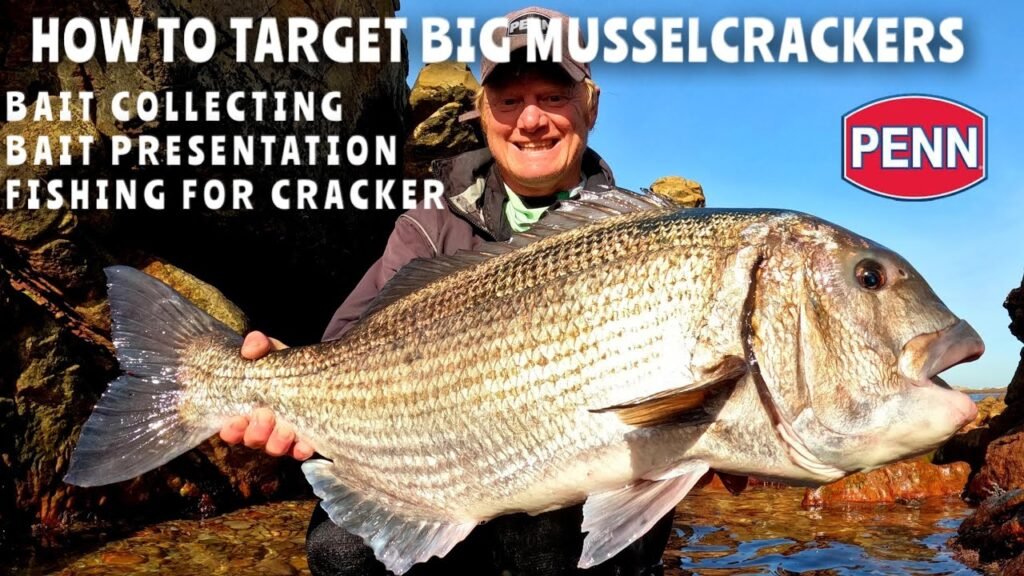
TL;DR: Musselcracker Fishing Key Takeaways from the Video
Musselcracker fishing is won before the cast. In Saltwater Fishing South Africa’s video, the creator shows that the real work starts with reading rough water, collecting natural bait, building a bait that survives pickers, and fishing tackle strong enough for bricks, kelp, surge, and sudden pressure. If you landed here from https://www.youtube.com/results?search_query=saltwater+fishing&sp=EgIYBQ%253D%253D, this written summary gives you the practical steps without making you scrub through the whole clip.
From 0:00 to 0:45, the video shows strong sea, heavy surge, and the search for armadillo under rocks on sandy bottoms. According to Saltwater Fishing South Africa, this is the kind of effort cracker fishing demands: you get wet, you scratch for bait, and you make the most of good light before the sun climbs too high.
- Main bait: armadillo collected from under rocks and built into a shell-on bait.
- Hook: Fusion/0 offset circle hook, shown at about 2:05-2:20 and praised again after the fish is landed.
- Trace: short, heavy mono snoot with a limited sliding sinker setup.
- Tackle: Berkley Venom Medusa rod, Penn Slammer reel, lb Berkley X9 braid.
- Result: an estimated 13-13.5 kg musselcracker in excellent condition.
The creator’s message at 8:35-8:50 is simple and earned: “hard effort equals reward.” The capture also has value beyond a photo. From 9:35-11:30, the fish is tagged, handled carefully, and released, turning a trophy catch into a data point for future fish movement and growth information.

Why Musselcracker Fishing Rewards Preparation, Not Luck
Musselcracker fishing looks dramatic once the rod bends, but the video makes one thing clear: the bite is only the visible part of the process. From 0:20 to 1:20, the creator is not casting yet. He’s searching under rocks, checking sandy-bottom areas, and collecting the bait he believes will give him the best chance. That matters because white musselcracker are powerful reef feeders, not random open-sand scavengers.
According to Saltwater Fishing South Africa, cracker fishing often means getting wet before you even rig up. The creator says that collecting bait is “not always a dry story,” and the footage backs that up. You see him working around water, rocks, surge, and slippery terrain before sunrise, while the light is still good and the winter conditions are lining up.
For anglers, that lesson is even more relevant. White musselcracker are prized South African rock-and-surf fish because they pull hard, feed close to structure, and can reach impressive sizes. They’re also fish that deserve restraint. Large individuals are valuable breeders, and local bag limits, size limits, closed areas, and bait-collection rules should be checked before every trip because regulations can change by province and zone.
The opening conditions are not comfortable: strong sea, heavy push, clean winter water, and a north-westerly wind. The creator explains that blacktail can be active in this clean water, which affects bait design because small fish may strip soft bait fast. In practical terms, your preparation list should include three things before the cast: a durable bait, a short abrasion-resistant rig, and a safe plan for landing a fish if it heads straight for rocks.
Reading the Water for Musselcracker Fishing Success
The creator opens the video by saying, “the sea is quite strong… it’s pushing… it’s a lot of surge” at about 0:00-0:12. That isn’t just scene-setting. It explains why he’s targeting rough, moving water rather than a calm sandy beach. Musselcracker feed around reef, ledges, gullies, kelp edges, and broken ground where waves dislodge crabs, shellfish, worms, and other hard-bodied food.
Rough water gives these fish three advantages. First, whitewater breaks up visibility, so a big fish can feed with less caution. Second, surge knocks natural food loose from cracks and ledges. Third, turbulent water lets the bait move naturally without looking too perfect. As demonstrated in the video, this kind of water can be productive, but only if you can fish it safely and keep your trace from tangling.
When scouting a spot, look for mixed reef and sand patches rather than uniform sand. A classic cracker zone often has a casting lane, a feeding ledge, and a foamy gully where water washes over structure. You want water that moves, but not a platform that gets swept. Spend at least 5-10 minutes watching the wave sets before stepping down. The biggest wave in a set is often the one people didn’t wait long enough to see.
- Look for: whitewater over reef, darker rock patches, sandy holes between ledges, and kelp edges.
- Avoid: low platforms with no exit route, surge channels behind you, and rocks that stay wet between sets.
- Before casting: decide where you’ll stand during the fight and where you’ll land the fish if it comes in green.
Safety isn’t optional here. Wear grip footwear, keep your tackle bag high and secure, never turn your back on the sea, and fish with a partner where possible. Heavy surge might help the bite, but it also punishes poor footwork.
Best Natural Bait for Musselcracker: Armadillo from the Rocks
At 0:20-1:10, the creator searches under rocks on sandy bottoms for armadillo, calling it the bait he wants “to catch cracker.” This is a major teaching point in the video. Instead of relying on a packet bait or a soft bait that pickers can destroy in seconds, he collects a tough, natural bait from the exact environment where musselcracker feed.
In practical rock-and-surf terms, armadillo is a crustacean-style bait with shell, meat, guts, and strong scent. It mimics the hard food items a musselcracker is built to crush. These fish have heavy jaws and feed confidently on reef organisms, so a shell-on bait makes sense when you’re fishing bricks and gullies. The video shows several good-sized armadillos being collected, and the creator calls them “bananas” for big cracker at about 1:20-1:55.
The important part is not only what bait you use, but how you collect it. Ethical bait collection keeps the fishing sustainable and prevents damage to small intertidal zones. Replace any rocks you overturn, take only what you need for that session, and spread your collecting across a wider area rather than stripping one patch. You should also check local bait permits and species-specific limits before collecting, because what’s legal in one area may not be legal in another.
If armadillo is unavailable or not legal where you fish, use the same logic: choose natural reef baits that smell strong, stay on the hook, and match what the fish eat locally. Crab, red bait, alikreukel, mussel, prawn, and other legal local baits can all have a place, but durability matters. In water with blacktail and other pickers, soft bait alone may disappear before the target fish arrives.
How the Creator Builds a Durable Armadillo Bait
From 1:55-3:45, the video demonstrates a bait-building method that is simple but very deliberate. The creator slightly bashes the armadillo, hooks through the tongue and shell, secures the shell section, then adds meat and guts around it. He uses a Fusion/0 offset circle hook, which is large enough to carry a bulky bait while still presenting a clear hook point when the fish commits.
The shell piece is the clever part. According to the creator, blacktail often peck away at the soft meat, especially in clean winter water with a north-westerly wind. The shell section stays behind longer, leaving a hard, natural mouthful for a musselcracker to find and crush. That small detail can be the difference between winding in an empty hook and getting the one bite you were waiting for.
- Lightly break the armadillo: soften it enough to release scent without turning it into mush.
- Set the hook through tough structure: tongue and shell give the bait a strong anchor point.
- Add meat and guts: keep scent-rich pieces exposed so the bait works quickly.
- Bind firmly: use bait cotton to stop surge and pickers from stripping the bait immediately.
- Check shape: avoid a bait so bulky that it spins in turbulent water.
In our experience, the best shell baits are tight, smelly, and slightly uneven rather than perfectly round. If the rod tip shows constant picker activity and the bait has been down for several minutes, recast and inspect it. A cracker bait needs enough substance left to be worth eating.
Musselcracker Fishing Rig: Short, Strong and Built for Surge
The rig shown at 3:55-5:00 is built around one idea: reduce weak points in turbulent water. The creator uses a heavy mono snoot, a swivel connection, a limited sliding sinker, and a stopper swivel running up to the leader. He explains that the sinker trace is roughly a bit shorter than the bait, and that he sometimes fishes it even shorter.
His key advice is direct: use “thickish line… not too thin a trace and not too long a trace.” In rough water, a long trace can twist, loop, and kink. Those small loops may look harmless when you’re baiting up, but under heavy pressure from a big fish, they become failure points. If you’re fishing around bricks, the trace must survive surge, reef contact, and sudden shock.
The creator says he is using Maxima Ultragreen as a substitute on the day, but normally prefers 0.90 mm Berkley ProSpec for this style of fishing. That detail gives you a useful benchmark. A trace in the 0.80-1.00 mm range is not delicate, but musselcracker fishing in reef country is not finesse fishing. Abrasion resistance beats elegance when a fish is trying to cut you off.
- Start with a heavy leader: use abrasion-resistant mono suitable for rock contact.
- Keep the hook snoot short: short traces twist less in surge and keep the bait near the bottom.
- Use a limited slide: let the sinker move enough for presentation, but not so much that the rig becomes messy.
- Choose the right sinker: heavy enough to hold, but not so heavy that the bait is pinned unnaturally.
- Test every knot: pull hard before casting; don’t wait for a kg fish to test your rig.
Bite detection is also different. The creator says musselcracker usually don’t nibble; when they eat, they “smash it.” That means your drag, stance, and rod angle must be ready before the bait lands.
Tackle Used in the Video: Rod, Reel, Braid and Hook Choice
After the catch, the creator highlights the exact tackle used: a Berkley Venom Medusa rod, Penn Slammer reel, 40 lb Berkley X9 braid, and a Fusion/0 offset circle hook. These aren’t random labels dropped after the fight. Each item has a role in musselcracker fishing, especially when the fish is hooked close to rocks and the angler has only seconds to turn it.
A strong rock-and-surf rod helps lift line over ledges and apply side strain. A sealed or well-protected reel matters because spray, sand, and salt are part of the job on exposed platforms. Braid improves contact with the bait and reduces stretch, which helps when you need immediate pressure. The lb braid used in the video gives a balance between casting distance, strength, and line capacity.
The creator specifically praises the white Berkley X9 braid at about 8:55-9:05, saying it is strong and “definitely worth your buck” for fishing around bricks. He also says the Fusion/0 offset circle hook “doesn’t miss” when the fish commits. Circle hooks can improve corner-of-mouth hookups when used correctly, but you should avoid striking wildly. Let the fish load the rod, then apply pressure smoothly.
If you’re building a practical starter setup, prioritize function over looks. In our experience, the best entry point is a heavy rock-and-surf rod, a 6000-8000 size spinning reel, 40-50 lb braid, 0.80-1.00 mm leader or trace material, and quality 6/0-8/0 circle hooks matched to bait size. Smooth drag, serviceable parts, and abrasion resistance matter far more than cosmetic finishes.
Fighting a Musselcracker Around Rocks Without Losing It
The fight sequence from 5:30-7:50 shows why heavy tackle is not about ego. It’s about control. Once hooked, a musselcracker can use reef, wash, and surge almost immediately. The creator repeatedly calls for “heat”, which is a practical cue: he is applying pressure to turn the fish before it reaches structure that could cut the line.
This is one of the most useful parts of the video because it shows the chaos that written tackle lists can’t fully explain. The fish doesn’t swim politely into open water. It angles across rocks, the water is moving, and the angler has to react while managing line angle, rod pressure, and footing. At about 6:40-7:10, the creator also mentions glare from the sun and an unseen rock. That’s a reminder to study the landing zone before you hook a fish, not after.
- Keep the rod high when you need to clear shallow rocks or lift line over wash.
- Lower the rod if the line is rubbing high across a ledge and you need to change the contact angle.
- Use side strain to pull the fish away from danger rather than straight back toward you.
- Avoid slack when pumping the rod; gain line only when the fish gives it.
- Move your feet early if you need a better angle, but never step into unsafe surge.
Shorter fights also help the fish. A long battle increases exhaustion and can reduce release success, especially with big breeding fish. Strong gear, steady drag, and confident pressure give you a better chance of landing the fish quickly and returning it in good condition.
Tagging, Measuring and Releasing a Big Musselcracker
The landed fish is described as a “stunning specimen” in very good condition, with a big head and an estimated weight of 13-13.5 kg. At 8:10-9:30, the video shows the result of the morning’s work: natural bait, rough water, strong tackle, and patient fishing all coming together. But the best part is what happens next.
The creator explains that he is a member of a tagging institute and demonstrates the tagging process before release. As demonstrated in the video, the tag is placed midway near the dorsal area. He lifts a scale, inserts the tag at roughly a 45-degree angle into the flesh, and reads out the tag number: 466197466. That kind of detail matters because it turns a catch into useful information if the fish is ever recaptured.
For the full demonstration, watch the original video here: EPIC BATTLE WITH A MUSSELCRACKER!. You can also follow the creator through Saltwater Fishing South Africa on YouTube. For South African marine tagging context, the South African Association for Marine Biological Research’s ORI information is available here: ORI at SAAMBR.
- Wet your hands before touching the fish to protect its slime coat.
- Support the belly and avoid hanging a heavy fish vertically by the jaw.
- Keep it off dry rock where scales, eyes, and fins can be damaged.
- Minimize air time by preparing camera, tape, and tag gear before lifting the fish.
- Revive it facing into water movement and release only when it kicks strongly.
The creator calls it a big breeding fish, and that framing is right. Large musselcracker are not just impressive catches; they are valuable contributors to future stocks. A clean tag-and-release gives you the memory and gives the fish a chance to keep breeding.
Common Mistakes When Targeting Musselcracker
The video is useful because it shows mistakes without turning them into a lecture. The first common mistake is using too little bait when pickers are thick. At 2:45-3:35, the creator explains that blacktail can pack the bait off quickly. If your bait starts small, it may be gone before a musselcracker arrives. His shell-on armadillo design solves that by leaving a durable mouthful behind.
The second mistake is fishing a trace that is too long in turbulent water. From 4:45-5:15, he warns that long traces can twist and form loops. Once mono kinks, its strength is compromised. In musselcracker fishing, one hidden weak point can cost you the only bite of the morning.
The third mistake is using bait that lacks durability. Soft meat alone may smell good, but it can disappear fast in clean water with small fish around. The creator’s bait works because it combines scent, bulk, and shell. That gives the target fish time to find it while still attracting attention.
The fourth mistake is underestimating terrain during the fight. The fish in the video immediately uses rocks and surge, forcing the angler to apply pressure and manage angles. If you haven’t chosen a safe landing route before casting, you’ll be solving too many problems at once once the rod loads.
- Pre-cast checklist: inspect trace for nicks, pull-test knots, confirm drag pressure, secure the bait with cotton, choose your landing path, watch at least a few wave sets, and keep tools accessible.
- Rig checklist: short hook snoot, abrasion-resistant mono, clear hook point, sinker heavy enough to hold, and no twists before the cast.
- Safety checklist: grip shoes, dry escape route, partner nearby if possible, and no gear placed where surge can take it.
Final Thoughts: Turn the Video Lessons into Your Next Musselcracker Fishing Plan
The biggest lesson from Saltwater Fishing South Africa’s musselcracker fishing video is not that one magic bait catches every fish. It’s that preparation stacks the odds. The creator collects the right bait, builds it to survive blacktail, keeps the trace short and strong, fishes water with surge, and uses tackle that can pressure a fish before it reaches dangerous structure.
Your next step is to turn that into a repeatable plan. Before your trip, check local regulations for bait collection, bag limits, size limits, and protected areas. At the spot, watch the water for several minutes, choose a safe platform, and identify a landing route before casting. When rigging, use abrasion-resistant mono, a short trace, a durable natural bait, and a hook size that suits the bait rather than the fish you hope to catch.
If you hook a fish, apply pressure early but stay balanced. Use side strain, keep slack out of the line, and move only when it’s safe. If you land a big musselcracker, treat it as a breeding fish first and a trophy second: wet hands, fast photos, careful support, and a strong release. That’s how the catch becomes more than a moment. It becomes good angling.
Key Takeaways
- Successful musselcracker fishing starts before the cast: find rough but safe water, collect quality natural bait, and rig for abrasion.
- Armadillo bait works because it combines scent, meat, and shell, leaving a durable mouthful after blacktail pick at the soft pieces.
- Short, thick traces reduce twisting and weak points in surge, especially when fishing around reef and bricks.
- Heavy tackle helps shorten the fight, control the fish near structure, and improve release condition.
- Tagging and safe release turn a trophy musselcracker into a conservation win as well as a memorable catch.
Frequently Asked Questions
What is the best bait for musselcracker?
The video highlights armadillo as a top natural bait because it has shell, meat, and scent, and it survives picker fish better than soft bait alone. Other legal local reef baits such as crab, red bait, alikreukel, mussel, and prawn can also work depending on your area.
What hook size should I use for musselcracker fishing?
The creator uses a Fusion/0 offset circle hook for a large armadillo bait. A practical range is usually/0 to/0, matched to bait size, with the hook point kept clear.
Do musselcracker bite in rough water?
Yes. The video opens with strong sea and heavy surge, then ends with a large musselcracker landed from those conditions. Rough water can stir up food and give fish cover, but only fish it if your platform and exit route are safe.
How heavy should my trace be for musselcracker?
The creator says he normally prefers 0.90 mm Berkley ProSpec and warns against thin, long traces in turbulent water. Short, heavy, abrasion-resistant mono is the safer choice around rocks and surge.
Should you release big musselcracker?
Yes, releasing large musselcracker is good practice because big fish are valuable breeders. In the video, the fish is tagged, handled carefully, revived, and released instead of being kept.